








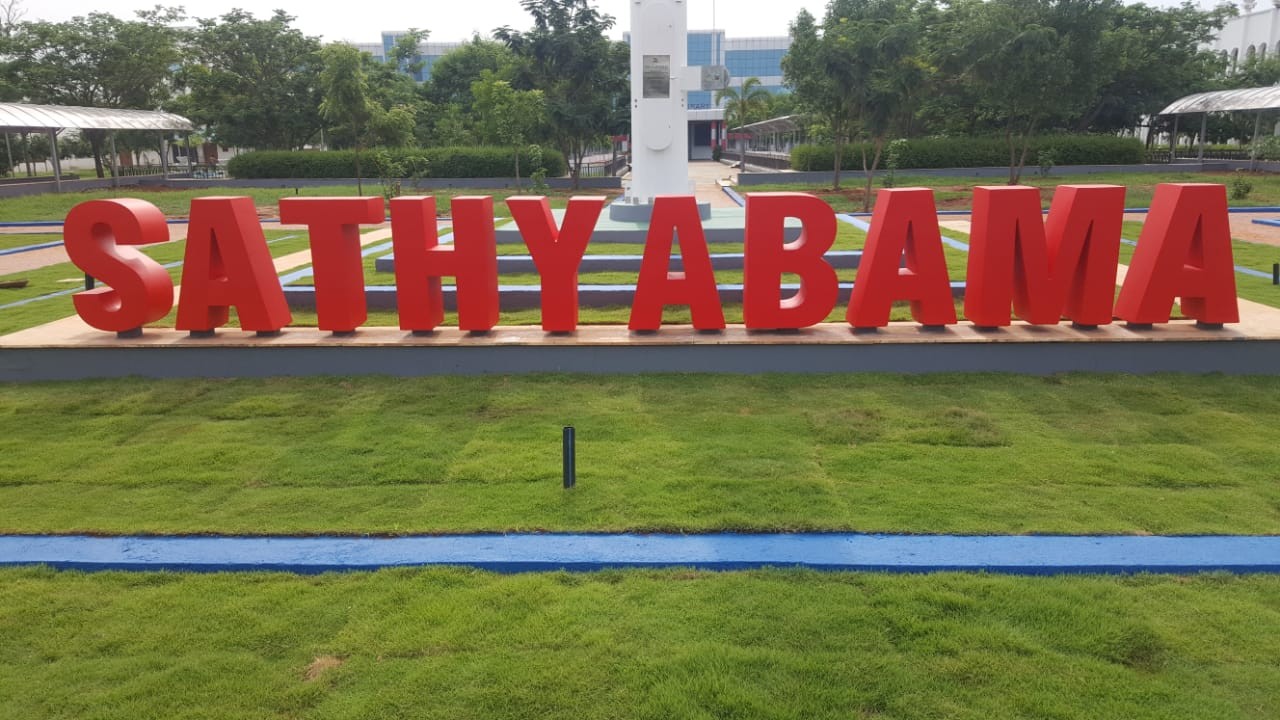
Sathyabama Institute of Science and Technology actively contributes to SDG 15 – Life on Land, which focuses on protecting, restoring, and promoting sustainable use of terrestrial ecosystems, halting biodiversity loss, and ensuring sustainable management of forests and natural resources. The university’s initiatives address multiple SDG 15 targets through research, capacity building, workshops, and technological innovations.
Sathyabama demonstrates strong commitment to SDG 15 through extensive green cover enhancement, biodiversity conservation, and environmental restoration initiatives. The institution has significantly expanded its campus greenery by planting a wide variety of trees, shrubs, herbs, palms, aquatic plants, cacti, and grasses, creating a rich and diverse ecosystem. These efforts support habitat creation, carbon sequestration, and ecological balance.
The University promotes sustainable ecosystem management through the establishment of dedicated green zones, botanical collections, and landscaped areas that enhance both environmental quality and biodiversity. Continuous efforts in tree plantation drives, native species promotion, and maintenance of green spaces further strengthen land restoration and conservation practices.
Through these initiatives, Sathyabama contributes to reducing land degradation, protecting terrestrial ecosystems, and establishing a climate-resilient and biodiverse campus environment—directly advancing the targets of SDG 15: Life on Land.
Sathyabama maintains a strong commitment to preserving and enhancing terrestrial ecosystems through continuous expansion of green cover on campus. The institution nurtures a diverse collection of plant species—trees, shrubs, herbs, palms, aquatic plants, cacti, grasses, and climbers—ensuring rich biodiversity and ecological balance.
Research Centres Contribution towards SDG 15
Sathyabama has a well-established research centres which equipped with advanced laboratory tools for animal research, offering valuable resources to benefit scholars and scientists across various disciplines.
Centre for Earth and Atmospheric Sciences
Centre comprises of multi-disciplinary team of meteorologists, geologists, hydrogeologists, physicists and geochemists who are actively engaged in basic research on Earth Science, Remote Sensing, GIS, Modeling, Agriculture, Environmental and Air Pollution studies. It is an emerging interdisciplinary centre that aims to tackle climate change and work to preserve the natural resources. Advanced GeoEnvironmental Laboratory stands as a beacon of innovation within the Centre, equipped with cutting-edge instruments and technologies that redefine learning and research.
Centre for Laboratory Animal Technology and Research
Centre for Laboratory Animal Technology and Research (CLATR) marks a significant milestone for Sathyabama Institute of Science and Technology. This cutting-edge, CCSEA-approved laboratory animal facility adheres to Good Laboratory Practice (GLP) standards and meets international benchmarks. Crafted with global expertise, the centre is positioned to make a major impact on the worldwide research community.
It provides a controlled and sterile environment for housing animals, with specialized equipment to monitor their health and well-being. The facility plays a crucial role in bridging the gap between basic research and clinical trials, ensuring the safety and efficacy of potential treatments before human testing.
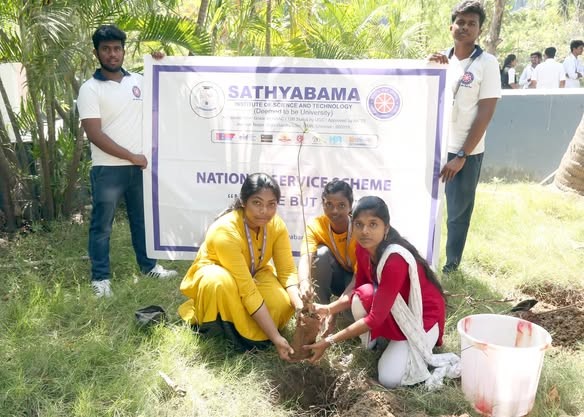
Tree Plantation Drives - a sustainable approach towards green campus approach
The NSS unit of Sathyabama Institute of Science and Technology conducted a Tree Plantation Drive on 27.03.2024 to promote the significance of strengthening our ecosystem. This is an attempt to encourage the concept of Natural Regeneration and planted 100 saplings in our campus. Around 80 NSS Volunteers have participated and made the event successful.
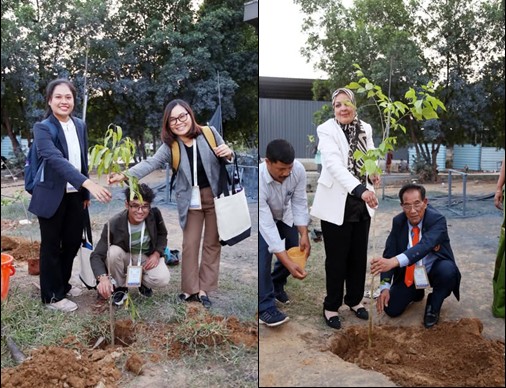
Foreign delegates who visited our university as a part of the International Conference ICIST 2024, have also taken part in the Tree plantation drive that was organised near Sathyabama on 2nd February 2024.
Sathyabama’s policies to ensure sustainability
Sathyabama supports SDG 15 through biodiversity-rich green campus policies, environment friendly practices, food policy, afforestation drives, sustainable landscaping, soil and water conservation practices, responsible waste management systems, and consistent awareness programmes aimed at protecting and restoring terrestrial ecosystems.
Sathyabama has various policies tonsure the Conservation, Restoration and Sustainable use of Terrestrial Ecosystems, Conservation of Endangered Species, Waste Management, Water Quality, food policy to ensure that food on campus is sustainably farmed, Marine pollution policy and policy to reduce the impact of alien species on campus.
https://sist.sathyabama.ac.in/download/FoodPolicy.pdf
https://sist.sathyabama.ac.in/download/PolicytoEnsureTheConservation.pdf
https://sist.sathyabama.ac.in/download/CONSERVATION_OF_ENDANGERED_SPECIES.pdf
https://sist.sathyabama.ac.in/download/WaterQuality.pdf
https://sist.sathyabama.ac.in/download/EnvironmentFriendly.pdf
https://sist.sathyabama.ac.in/download/POLICYONWASTEMANAGEMENT.pdf
Faculty involvement to identify, monitor and protect any IUCN Red Listed species and national conservation list
One of the researcher from the research centre of Sathyabama has been the co-lead for IUCN CEM Ecosystem Based Aquaculture Specialist Group. They structure the policy and related conservation strategies as well as propose responsible management methods and tools, and build bridges between stakeholders by offering guidance to managers and practitioners, and developing an integrated approach between institutions and environmental organizations, both governmental and non-governmental.
https://iucn.org/our-union/commissions/group/iucn-cem-ecosystem-based-aquaculture-specialist-group
Preclinical Animal Models and Its Research
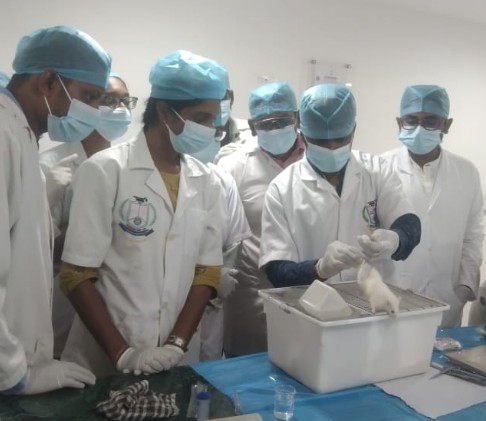
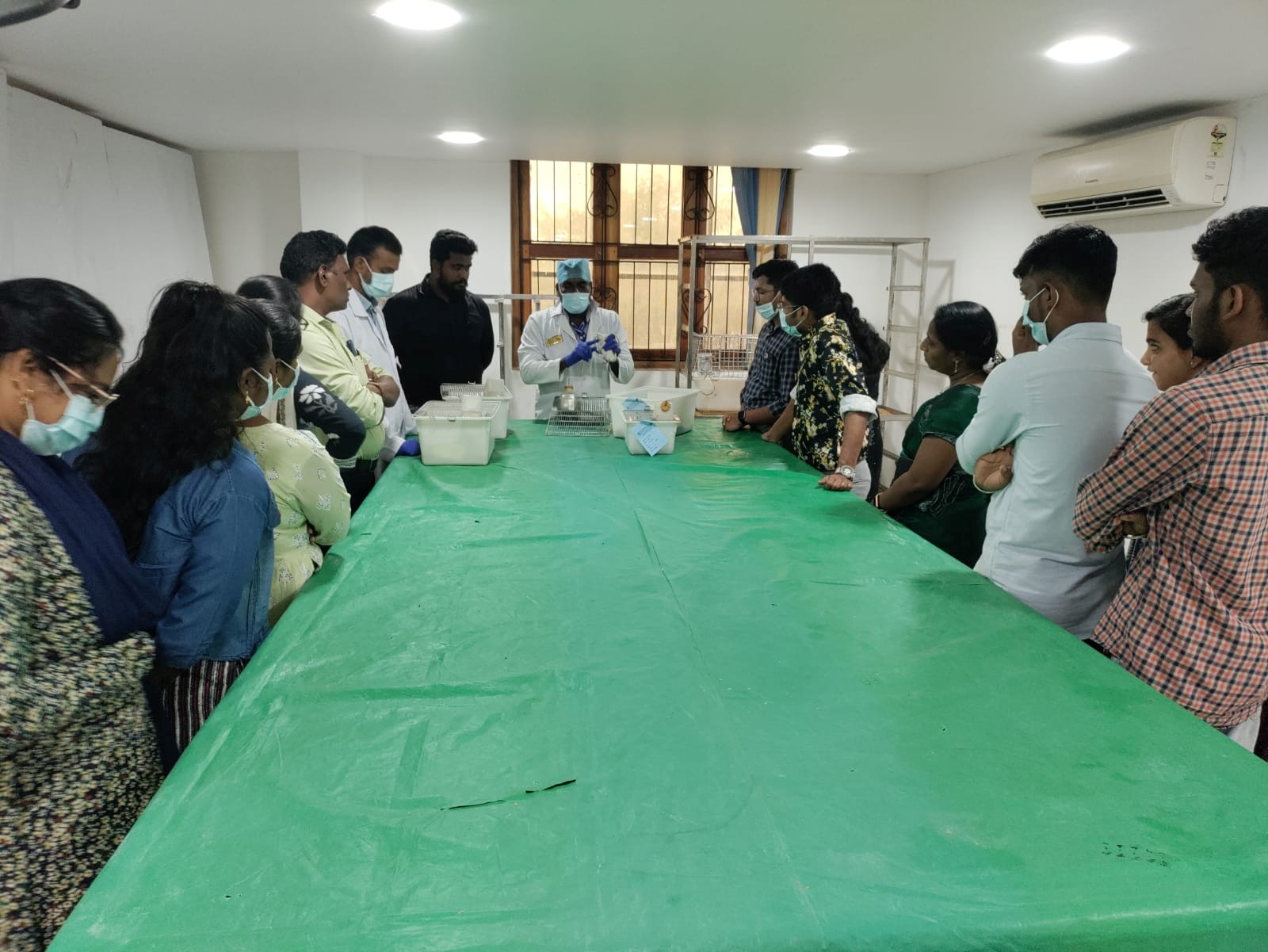
Centre for Laboratory Animal Technology and Research, Sathyabama Research Park, conducted Orientation Programme on Preclinical Animal Models and Its Research on 2nd November 2023. Brief lecture on the routes of administration of drugs, necropsy, and collection of blood, behavioral study of lab animals, sampling, biochemical analysis, and microscopy techniques were given. The participants were sensitized about the proper use of animals for research and the humane use of animals before, during, and after animal experiments. The participants visited the lab animal facility, where the structure and function of the facility were explained to them.
Institutional Animal Ethics Committee (IAEC)
Centre for Laboratory Animal Technology and Research, Sathyabama Research Park, Sathyabama Institute of Science and Technology (SIST), Chennai, conducted “21st Institutional Animal Ethics Committee (IAEC) on 22nd July, 2023. A 8 member team appointed by the Committee for Control and Supervision on Experiments in Animals (CCSEA), Ministry of Fisheries, Animal husbandry and Dairy screened the proposals. 14 researchers, 4 from SIST and 10 from various institutes and industry such as Vel’s Institute of Science, Technology and Advanced Studies, SDNB Vaishnav College, Tagore Dental College and Hospital, SRM Institute of Science and Technology, Affyclone Laboratories Pvt. Ltd. participated in the IAEC meeting.
Link:
https://research.sathyabama.ac.in/professional-bodies/CentreforLaboratoryAnimalTechnologyandResearch