


Collaborations and Institutional Impact
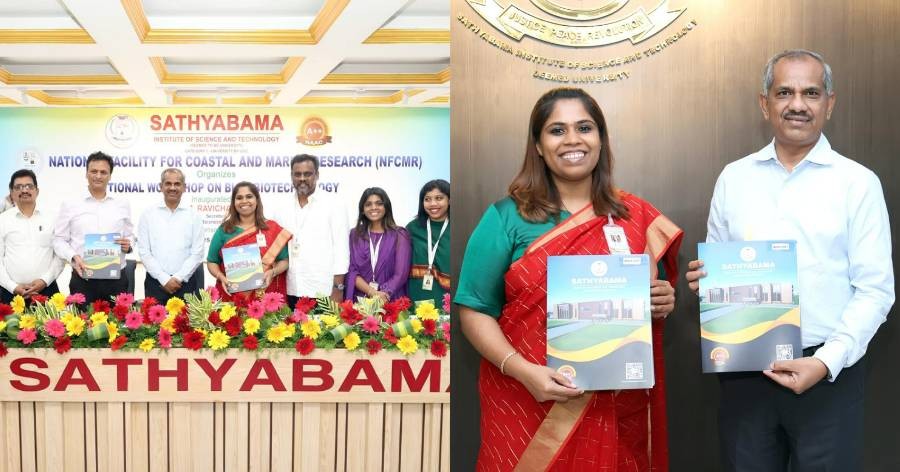
Sathyabama Institute of Science and Technology has built a robust network of collaborations across government, NGOs, industry, academia, and international organizations. These partnerships strengthen education, research, innovation, community development, and environmental stewardship, ensuring that initiatives are inclusive, impactful, and globally relevant.
Government Partnerships
The institution works closely with national and state agencies to expand access and drive innovation. Government scholarship schemes supported hundreds of students from marginalized backgrounds. Collaborations with the Ministry of Earth Sciences, Department of Science & Technology, and NITI Aayog have enabled renewable energy projects, waste‑to‑energy research, and school adoption under the Atal Tinkering Lab initiative. The National Centre for Polar and Ocean Research facilitated faculty participation in India’s Arctic Winter Expedition, while ISRO’s Physical Research Laboratory partnered on aerosol research that was discussed in Parliament.
NGO and Community Collaborations
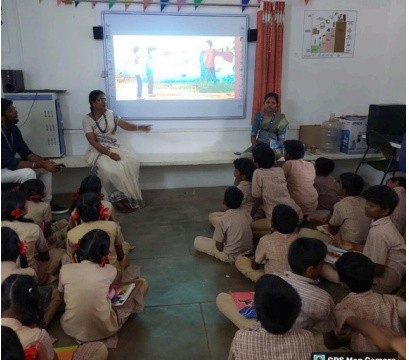
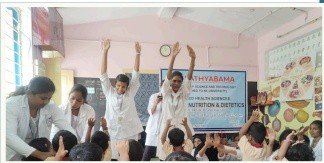
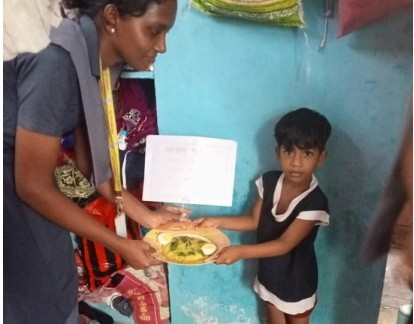
NGOs such as Agaram Foundation, Maatram Foundation, and Ability Foundation help identify deserving scholarship beneficiaries. Partnerships with the Mangrove Foundation of India support community‑based mangrove restoration, while International Justice Mission and Indian Community Welfare Organization collaborate on anti‑trafficking and civic rights awareness. Local NGOs and community groups have joined in health camps, dental outreach, and livelihood training, including fisherwomen self‑help groups for seaweed farming and women empowerment programmes in tailoring, baking, solar lamp making, and sanitary napkin production.
Industry Collaborations
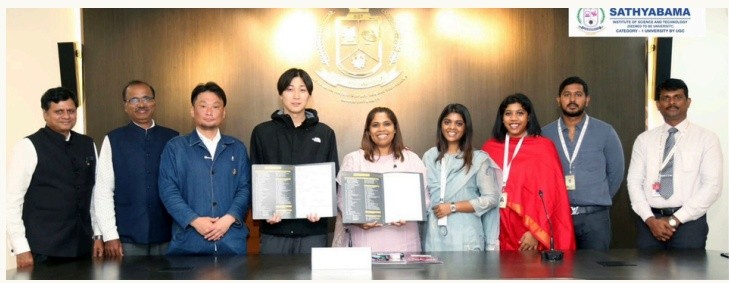
Sathyabama has signed over 70 MoUs with industry leaders to strengthen research, technology transfer, and skill development. Partners include HitoTech – Japan,Oracle Corporation, Space Zone India, ExcelR Solutions, Medway Hospital, Biopol Bioscience, AVN Ayurveda, Surana & Surana, Selvam & Selvam, and Jet Aerospace Aviation. In the energy sector, collaborations with WasmanPro Environmental Solutions LLP, NIN Energy India Pvt. Ltd., and CLRI have advanced biodiesel production, energy audits, and waste‑to‑energy solutions. VANS Chemistry Pvt. Ltd. supports safe e‑waste recycling and awareness programmes. Industry partners such as Seabytes, PrimeGen, Nanovea, Carl Zeiss, and Vetbiotic contribute to marine biotechnology and aquaculture research.
Academic and International Collaborations
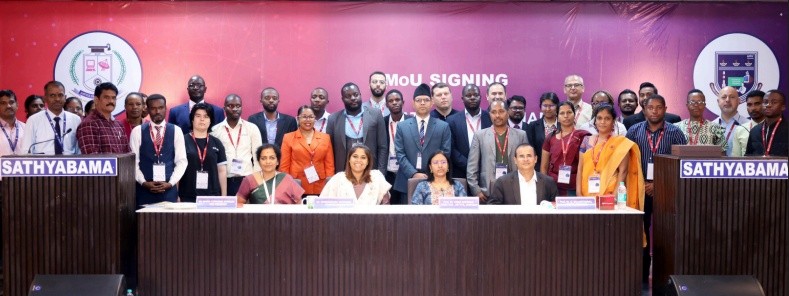
Global and academic partnerships expand the institution’s research and innovation footprint. Collaborations include NITTR, Gulf Medical University, Nottingham Trent University (UK), University Technology Malaysia, Transilvania University of Brasov (Romania), Cukurova University (Turkey), LeTourneau University (USA), and Powiślański University (Poland). Participation in the EU‑funded ERASMUS project has positioned Sathyabama among 14 coordinating institutions worldwide. Centres of excellence such as the Research Park, Technology Business Incubator, Makerspace, Centre for Ocean Research, Centre for Climate Change Studies, Centre for Waste Management, and Centre of Excellence for Energy Research anchor these collaborations, linking faculty, students, and international networks.
Major Outcomes of Collaborations
Scholarships: 1,863 students supported in 2023–24 through government, NGO, and institutional schemes.
Research & Innovation: 82 funded projects (~₹20 crore), 97 startups incubated, and 237 patents filed.
Community Outreach: Thousands of citizens engaged through health camps, legal literacy workshops, climate awareness drives, and livelihood training.
Global Engagement: Active roles in IUCN, ERASMUS, AGU conferences, Arctic expeditions, and collaborations with international universities.
Programmes / Courses contributing to SDG
Sathyabama Institute offers M.Arch in Sustainable architecture https://www.sathyabama.ac.in/academics/schools/school-building-and-environment and the in other programmes the following courses are delivered during 2023-24 contributing to different SDGs
Engineering & Technology
Course Name | SDG Number(s) |
|---|---|
Principles of Management and Professional Ethics | SDG 4, SDG 16 |
Cyber Physical Systems | SDG 9 |
Artificial Intelligence | SDG 9, SDG 11 |
Data Science | SDG 9 |
Business Analytics | SDG 8, SDG 9 |
Blockchain & Cryptocurrency | SDG 9, SDG 16 |
Real Time System Design | SDG 9 |
Wind and Solar Energy | SDG 7, SDG 13 |
5G Networks | SDG 9 |
Mobile Application Development | SDG 9 |
Industrial Safety and Hazard Analysis | SDG 8, SDG 11 |
Disaster Management | SDG 11, SDG 13 |
Electric Vehicles | SDG 7, SDG 13 |
Internet of Things | SDG 9, SDG 11 |
Industrial Robotics & Expert Systems | SDG 9 |
Green Computing | SDG 12, SDG 13 |
Intelligent Robots & Drone Technology | SDG 9, SDG 11 |
Machine Learning | SDG 9 |
Augmented & Virtual Reality | SDG 9, SDG 11 |
Quantum Computing | SDG 9 |
Cyber Security / Ethical Hacking | SDG 16 |
Health, Medicine & Biotechnology
Biology for Engineers | SDG 3, SDG 15 |
Medical Optics & Laser Application | SDG 3 |
Public Health Engineering | SDG 3, SDG 6 |
e‑Health | SDG 3 |
Rehabilitation Engineering | SDG 3 |
Food Technology | SDG 2, SDG 12 |
Environmental Biotechnology | SDG 13, SDG 15 |
Cancer & Stem Cell Biology | SDG 3 |
Pharmaceutical Biotechnology | SDG 3 |
Community Nutrition | SDG 2, SDG 3 |
Food Processing Technology | SDG 2, SDG 12 |
Pharmacy Practice | SDG 3 |
Hospital & Clinical Pharmacy | SDG 3 |
Drug Delivery Systems | SDG 3 |
Regulatory Affairs | SDG 16 |
Bioethics, Biosafety & IPR | SDG 16 |
Law, Governance & Social Sciences
Constitutional Law | SDG 16 |
Human Rights Law & Practice | SDG 16 |
Information Technology Law | SDG 16 |
Right to Information | SDG 16 |
Labour Law | SDG 8, SDG 16 |
Public International Law | SDG 16, SDG 17 |
Private International Law | SDG 16, SDG 17 |
International Humanitarian & Refugee Law | SDG 16 |
Family Law | SDG 5, SDG 16 |
Legal Language & Drafting | SDG 16 |
Social Welfare & Legislation | SDG 1, SDG 10 |
Political Science / Indian Political System | SDG 16 |
Business & Management
Business Ethics & CSR | SDG 8, SDG 12, SDG 16 |
Corporate Governance | SDG 16 |
Global Business Management | SDG 8, SDG 9, SDG 17 |
Consumer Behaviour | SDG 12 |
Supply Chain Management | SDG 9, SDG 12 |
Treasury & Capital Markets | SDG 8 |
Insurance Management | SDG 8 |
Investment Analysis | SDG 8 |
Human Capital Management | SDG 8 |
Strategic HRM | SDG 8 |
International Business | SDG 17 |
Architecture & Built Environment
Urban & Regional Planning | SDG 11 |
Sustainable Urban Planning | SDG 11 |
Green Building Rating Systems | SDG 11, SDG 13 |
Sustainable Waste Management | SDG 12, SDG 13 |
Sustainable Landscape Planning | SDG 11, SDG 15 |
Building Energy Codes & Standards | SDG 7, SDG 13 |
Climate & Architecture in Tropics | SDG 13 |
Alternative Building Technology | SDG 11, SDG 12 |
Sciences
Green Technology | SDG 12, SDG 13 |
Environmental Science | SDG 13, SDG 15 |
Physics (Renewable Energy & Energy Harvesting) | SDG 7, SDG 13 |
Chemistry (Polymer / Industrial Chemistry) | SDG 9, SDG 12 |
Biochemistry & Microbiology | SDG 3 |
Psychology of Wellbeing | SDG 3 |
Positive Psychology | SDG 3 |
Social Psychology | SDG 3, SDG 10 |
Media, Arts & Fashion
Media Law & Ethics | SDG 16 |
Communication Research | SDG 9, SDG 16 |
Eco Fashion | SDG 12 |
Fashion Brand Management | SDG 12 |
Traditional Textiles of India | SDG 11 |
Visual Identity & Branding | SDG 12 |