


By promoting participatory governance, open academic methods, and community-driven projects that bolster social equity, Sathyabama Institute of Science and Technology actively advances SDG 16: Peace, Justice, and Strong Institutions. During the academic year 2023-2024, there were 15 outreach initiatives carried out on rural and underserved communities to raise awareness of rights and justice, and over 1,200 students attended workshops on legal literacy and civic engagement. In order to promote policy discussions and accountability frameworks, the organization has also formed five official partnerships with governmental and non-governmental groups. Through these quantifiable initiatives—student involvement, outreach initiatives, and institutional partnerships—Sathyabama exhibits its dedication to institutional integrity, justice, and the creation of societies that are resilient, peaceful, and sustainable.
1. Detailed Academic & Student-Centric Contributions to SDG 16
Based on the academic curriculum Sathyabama Institute of Science and Technology, offers the following programs and initiatives align with Sustainable Development Goal 16 (Peace, Justice, and Strong Institutions).
Reduce violence everywhere (Addressed by Criminal Law & Psychology).
Promote the rule of law and equal access to justice (Addressed by B.A. LL.B, Legal Aid Clinics).
Substantially reduce corruption and bribery (Addressed by Corporate Law & Governance courses).
Ensure public access to information (Addressed by Right to Information coursework).
1.1. Core Academic Programs
These degrees directly educate students on the rule of law, access to justice, and effective governance.
Program Level | Degree | SDG 16 Focus Areas |
Undergraduate | B.A. LL.B. (Hons.) | Constitutional law, human rights, and civil justice systems. |
B.B.A. LL.B. (Hons.) | Corporate governance (Anti-corruption), labor laws, and ethics. | |
B.Com. LL.B. (Hons.) | Financial regulations, combatting illicit financial flows | |
LL.B. | Three-year intensive law course focusing on criminal and civil justice. | |
Postgraduate | LL.M. (Constitutional Law) | Directly addresses "Strong Institutions" by studying the framework of governance. |
LL.M. (Criminal Law) | Focuses on reducing violence and fair judicial processes. | |
LL.M. (Intellectual Property) | Relates to legal identity and protection of innovation rights. |
1.2. Interdisciplinary & Supportive Programs
These programs support the "Inclusive Societies" aspect of SDG 16 by training professionals who work with vulnerable populations and community conflict.
Bachelor of Social Work (B.SW): Prepares students to work with marginalized communities, ensuring social inclusion and protection of fundamental rights (Target 16.9).
B.Sc. Psychology: Includes coursework on Social Psychology and Conflict Resolution, relevant for understanding violence reduction and promoting peaceful community dynamics.
M.A. English / B.A. English: Often includes electives on Human Rights Literature and Post-Colonial Studies, fostering critical thinking about justice and equality.
1.3. Specific Course Modules & Research Alignment
Within these programs, Sathyabama offers specific subjects that directly tackle SDG 16 targets:
Cyber Law & Cyber Crime: (Target 16.4 - Combat organized crime) taught in the Law school to address digital justice.
Right to Information (RTI): (Target 16.10 - Public access to information) A dedicated subject in the LL.M curriculum.
Alternative Dispute Resolution (ADR): Courses that teach mediation and arbitration to resolve conflicts outside of court, promoting peaceful resolutions.
Women & Criminal Law: Addresses violence against women and gender-based justice.
1.4. Institutional Initiatives & Clinics
Beyond the classroom, the university has established specific centers that operationalize SDG 16:
Legal Aid Clinic / Pro Bono Services: Provides free legal assistance to the poor, directly fulfilling Target 16.3 (Promote the rule of law and ensure equal access to justice for all).
Cyber Crime Clinic: A specialized center associated with the School of Law to research and combat digital offenses.
Partnerships: The university collaborates with organizations like the International Justice Mission and Kovise Foundation Conflict Resolution International, providing students with real-world experience in fighting injustice.
2. Institutional Actions Aligned with SDG 16
2.1 Governance, Transparency & Accountability
Sathyabama demonstrates strong governance practices through:
Open grievance redressal platforms, handling 70+ cases with a 99% resolution rate.
Annual transparency reporting, with publicly accessible financial, academic, and policy disclosures.
Anti-discrimination audits covering admissions, faculty hiring, and campus processes.
Digital trust-building measures, including data protection training and blockchain-based pilots for tamper-proof academic records.
These practices reinforce the institution’s commitment to fairness, ethical conduct, and responsible information management.
2.2 Inclusive & Participatory Decision-Making
The university fosters participatory leadership through:
Student Councils and Youth Parliaments, maintaining 30% representation of women, rural, and marginalized groups.
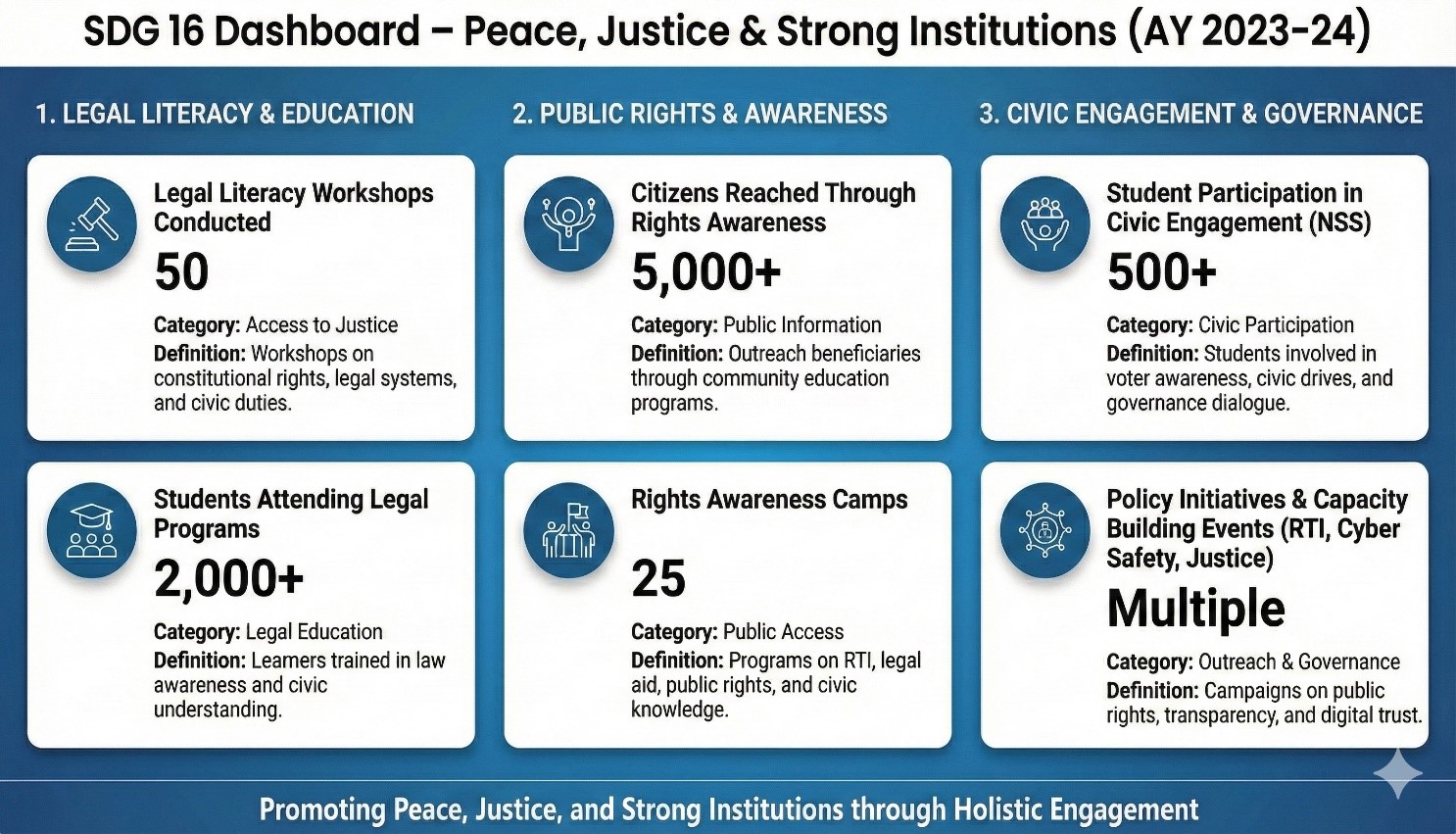
NSS civic engagement, where 500+ students were active in voter awareness drives, civic education, and governance dialogues.
Policy feedback loops where student council recommendations influence curriculum updates and institutional policies.
These platforms enable representation, inclusivity, and active citizenship among youth.
2.3 Legal Empowerment & Access to Justice
The School of Law plays a central role in advancing legal empowerment by offering:
50 legal literacy workshops on constitutional rights, grievance mechanisms, RTI, and justice systems.
Student Legal Aid Clinics, providing free consultations, document guidance, and dispute facilitation.
Rights awareness programs, reaching 5,000+ citizens across rural and urban communities.
Grievance portals enabling faster and structured resolution of student and staff issues.
Human rights awareness, including programs on POCSO, domestic violence, juvenile justice, and community mediation.
Through these initiatives, the university supports equal access to justice and strengthens the rule of law.
2.4 Anti-Discrimination & Equity Measures
Sathyabama enforces a strong institutional framework to promote non-discrimination and equal opportunity:
Inclusive Admissions Policy, with reserved seats and relaxed criteria for SC/ST, EWS, and rural students.
20% of the student were provided full Scholarships support for underprivileged, children of Indian Defense Personnel, destitute women, war‑widows, prison inmates and meritorious wards of non‑teaching staff
Accessibility improvements such as barrier-free infrastructure and assistive technologies.
Sensitization programs for faculty and staff on harassment, bias, and inclusive pedagogy.
Zero reported discrimination cases in 2023–24.
These outcomes underscore the university’s commitment to fairness and equal access.
2.5 Community Outreach for Peace & Justice
A major component of SDG 16 implementation is community interaction. Key actions include:
25 rights-awareness camps in villages, schools, and underserved urban areas.
Radio talks, webinars, and community workshops on civic rights and governance.
Workshops on digital security, cybercrime reporting, and privacy.
Community-based dispute mediation labs, led by law faculty and students.
Collaborations with NGOs and government departments, including Department of Science & Technology (DST), Ministry of Earth Sciences, ICWO, and NGOs involved in anti-human trafficking.
These engagements expand public access to justice, information, and institutional support.
3. Major Events & Programs
3.1 Odyssey – Mooting Skills Workshop
The School of Law conducted Odyssey, a specialized workshop designed to train students in courtroom etiquettes, legal drafting, articulation, argument structure, and research methods essential for successful mooting. The program helped nurture advocacy skills and introduced students to professional expectations in litigation and legal practice.
3.2 Constitution Day Celebrations – 74th Anniversary
To mark the 74th Constitution Day, the School of Law organized a series of interactive competitions such as Justice Journeys, Justice Jeopardy, and Clash of the Unprepared. These sessions encouraged students to engage with constitutional values, fundamental rights, and the spirit of democratic participation.
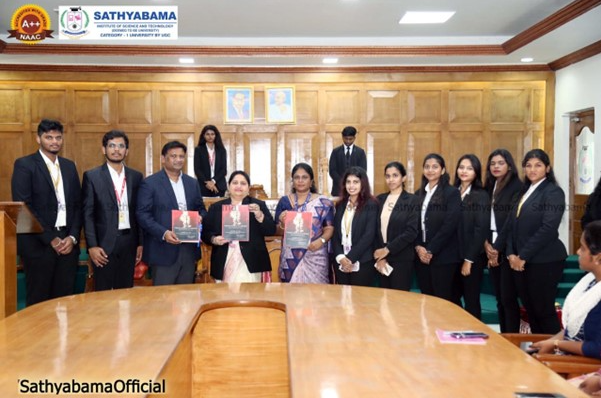
3.3 Intra Moot Court Competition
The SSL Moot Society hosted an intellectually intensive Intra Moot Court Competition, bringing together student advocates from multiple universities. The event simulated realistic courtroom procedures, enabling participants to develop strong argumentation skills before panels comprising judges, legal experts, and senior faculty members.
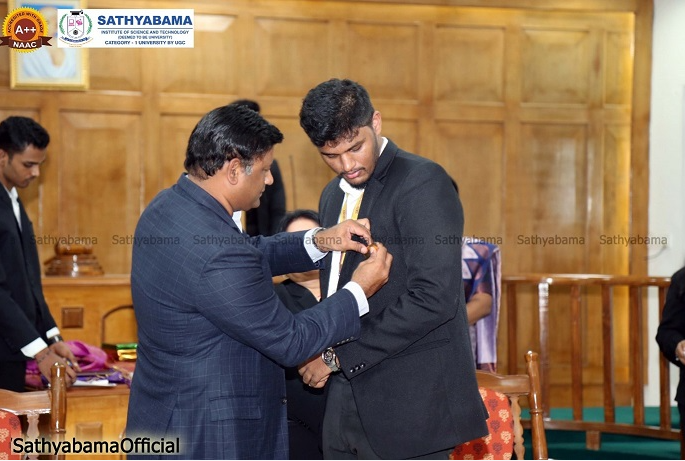
3.4 Inauguration of the Centre for Intellectual Property Rights (IPR)
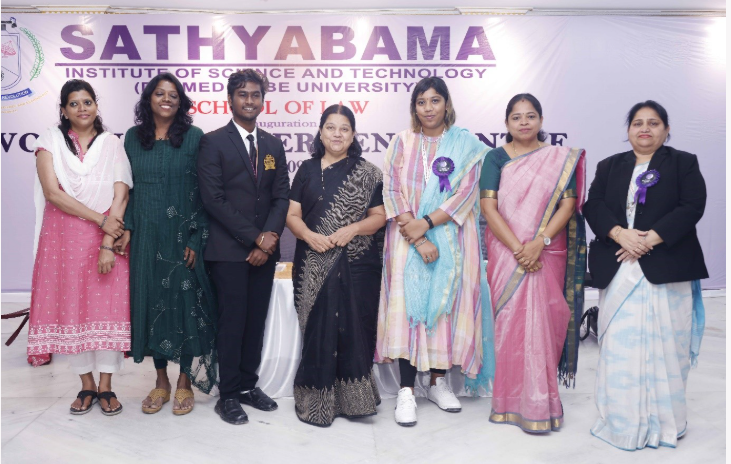
The School of Law inaugurated the Centre for Intellectual Property Rights, graced by Hon’ble Justice B. Rajendran (Retd.) and IP Attorney Mr. Rohit Magesh. The centre aims to promote innovation, research, and awareness on patents, trademarks, copyrights, and trade secrets, fostering a culture of responsible innovation among students.
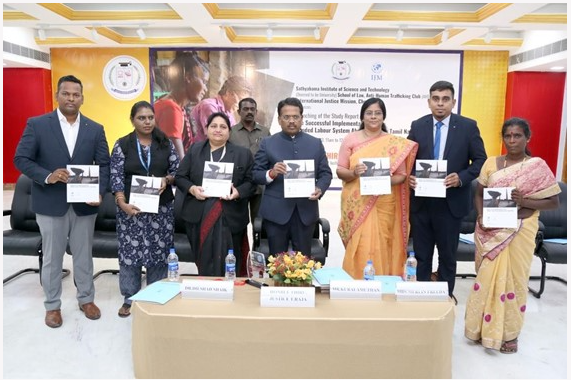
3.5 Anti-Human Trafficking Club – Launch of Study Report
The School of Law’s Anti-Human Trafficking Club, in partnership with International Justice Mission (IJM), released a significant study titled “Implementation of the Bonded Labour System Act in Tamil Nadu.” The initiative aims to raise awareness on trafficking, support survivor pathways, and strengthen legal responses in addressing organized exploitation.
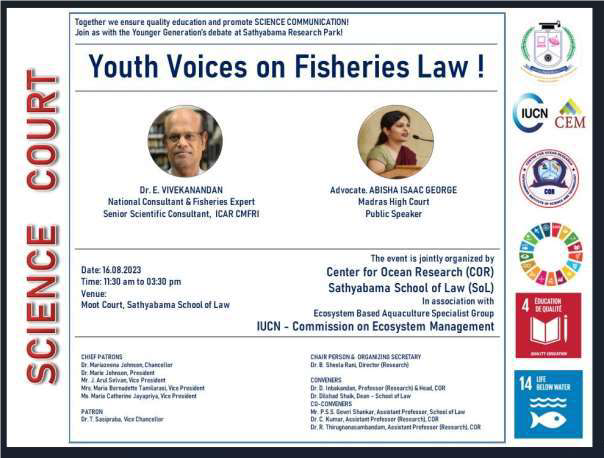
3.6 Youth Voices on Fisheries Law
The Centre for Ocean Research and School of Law jointly conducted Youth Voices on Fisheries Law, featuring experts like Dr. E. Vivekanandan (ICAR-CMFRI) and Advocate Abisha Isaac George. Discussions centered on sustainable fishing, marine biodiversity, illegal fishing, and legal protections for fishermen, connecting environmental law with SDG commitments.
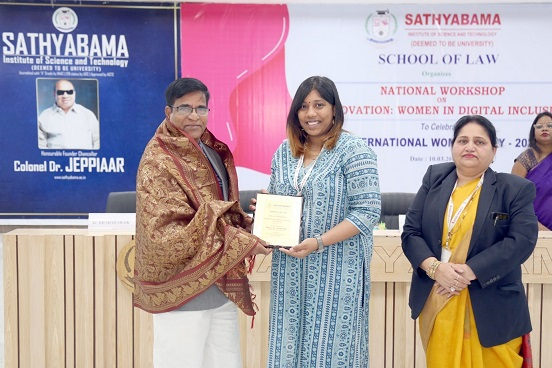
3.7 Femme Fiesta – Women’s Day Celebrations
The “Femme Fiesta” celebration opened with a Tamil poetry event “அவள் வசனத்தின் எதிரொலி,” followed by a week-long festival of panel sessions, student competitions, and empowerment activities. The program highlighted themes of gender rights, equality, leadership, and inclusion
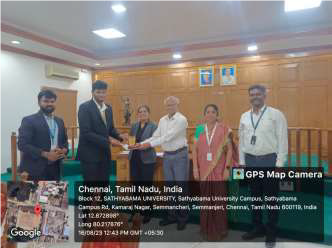
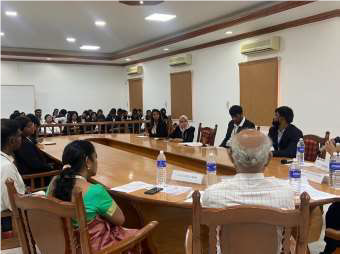
Technical discussion on fisheries law by the students of Sathyabama School
3.8 Technical Discussions & Student Panels
Students of the School of Law participated in technical discussions on fisheries law, exploring policy gaps, enforcement challenges, and the intersection of science and legal frameworks. Distinguished panelists recognized the students’ analytical insights and legal approach.
3.9 Crime Scene Investigation Competition
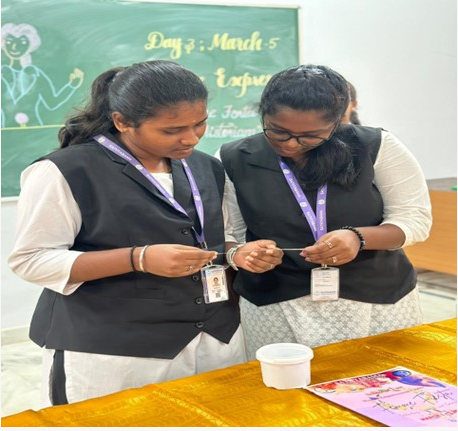
Sathyabama hosted the 1st National Crime Scene Investigation Competition, attracting participants nationwide. Students engaged with forensic science, evidence handling, legal admissibility, and investigative protocol in a simulated real-world crime scene environment.
3.10 Legal Aid Camp on Consumer Protection
A Legal Aid Camp was organized at Kundrathur to educate citizens on consumer rights, grievance procedures, documentation, and legal remedies. A panel of advocates from the Madras High Court offered guidance and on-site assistance.
3.11 RTI & Anti-Corruption Awareness Program
The School of Law, in association with Naattu Nadappu YouTube Channel, conducted a public awareness session on the Right to Information Act and anti-corruption strategies, encouraging transparency and accountability in public institutions.
3.12 Workshop on Drug Abuse Prevention
An awareness workshop was conducted to educate students on drug abuse, health consequences, and preventive approaches. Experts emphasized community vigilance, legal penalties, and early intervention methods
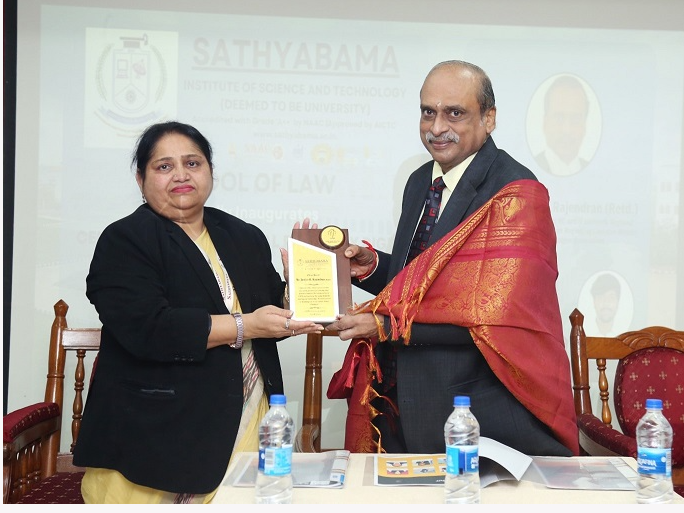
3.13 Regional Symposium on Anti–Human Trafficking
A symposium was held in collaboration with ICWO and Bachpan Bachao Andolan, focusing on trafficking prevention, victim rehabilitation, law enforcement coordination, and community-level vigilance.
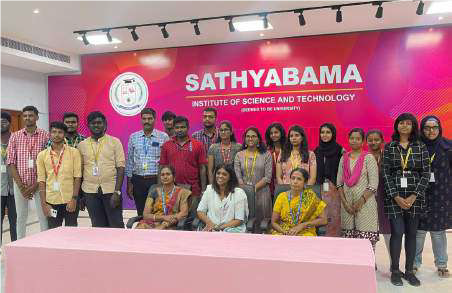
3.14 Field Visit to Juvenile Justice Board & Observation Home
LL.B. students visited the Juvenile Justice Board and State Observation Home to understand juvenile rehabilitation systems, procedural safeguards, and child rights protection mechanisms.
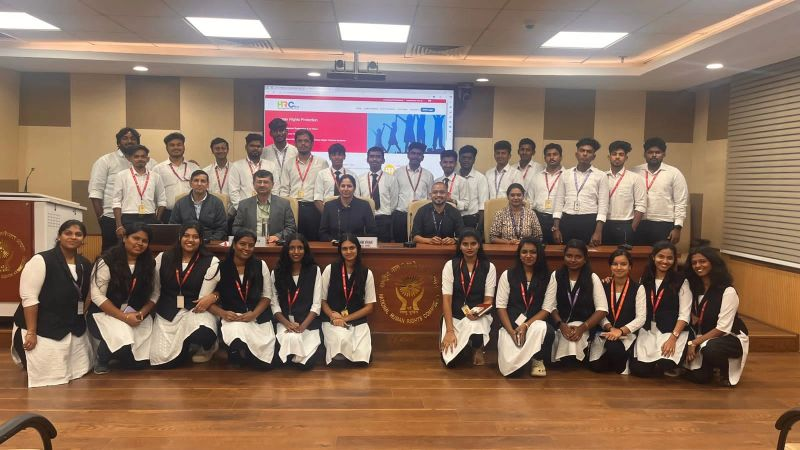
4. Institutional Social Responsibility (ISR)
4.1 Anbu Scholarship – Education for All
The Anbu Foundation, established by the Chancellor, provides full scholarships to students from economically marginalized communities.
Over 3,000+ students have benefitted since inception.
Around 500 students are currently supported each year.
NGO partnerships help verify applicants and ensure genuine beneficiaries
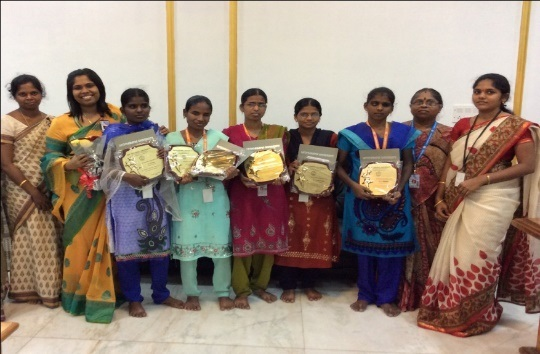
Opening Doors to Higher Learning: Sathyabama Chancellor Supports the Needy
4.2 Women Empowerment Bureau
The Bureau undertakes:
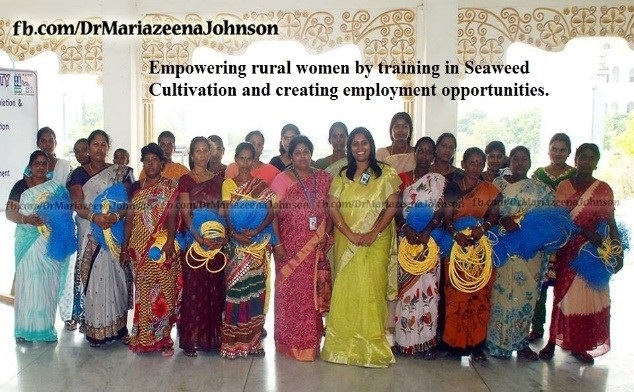
vocational training (mushroom cultivation, seaweed farming, tailoring, baking, solar lamp making, sanitary napkin production, beauty & wellness)
gender sensitization
leadership development
community empowerment through partnerships with NGOs
Over 350 women were trained in 2023–24.
4.3 Embedding Social Responsibility in Students
Students engage in:
social internships
NGO collaborations
research projects addressing societal issues
work with Centers for Waste Management, Climate Change Studies, and Ocean Research
These experiences build ethical responsibility and civic consciousness.
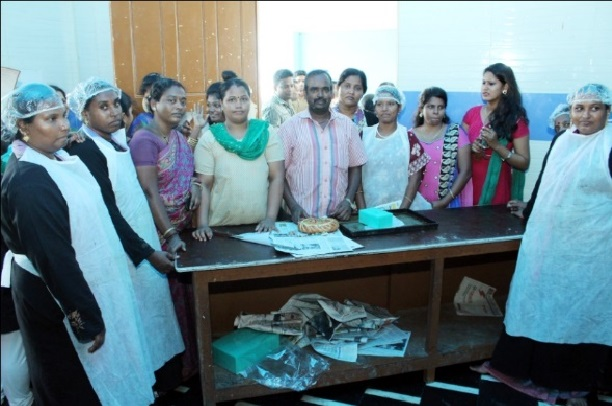
Empowering Every Voice: Sathyabama’s Inclusivity Driving SDG 16 for Justice and Strong Institutions:
Campus administration and inclusivity:
Anti-discrimination policy: Regular audits and compliance checks; no tolerance for discrimination based on caste, gender, handicap, or socioeconomic status. Scholarships and financial help for first-generation students, students from rural areas, and members of underprivileged groups are examples of inclusive admissions. Improvements to accessibility include barrier-free campus amenities, assistive technology, and exam modifications for students with impairments.