





Sathyabama Institute of Science and Technology: Leading the Way in Climate Responsibility and Sustainable Innovation
Climate change is impacting every nation across all continents, disrupting economies and affecting lives. Its consequences are already costing people, communities, and countries heavily — with even greater losses expected in the future. Shifting weather patterns, rising sea levels, and increasingly severe weather events are becoming the new normal, while greenhouse gas emissions have reached record highs. If meaningful action is not taken, the global average temperature could rise by more than 3°C before the end of this century. Those who are poorest and most vulnerable are suffering the greatest burdens.
Sathyabama Institute of Science and Technology is tackling the urgent challenges of climate change through a comprehensive strategy focused on research, education, outreach activities to the communities and the adoption of low-carbon energy solutions. Acknowledging that vulnerable communities are most affected by climate impacts, the institute is dedicated to minimizing its own carbon footprint and fostering sustainable practices throughout its campus.
Green Campus at Sathyabama Institute of Science and Technology
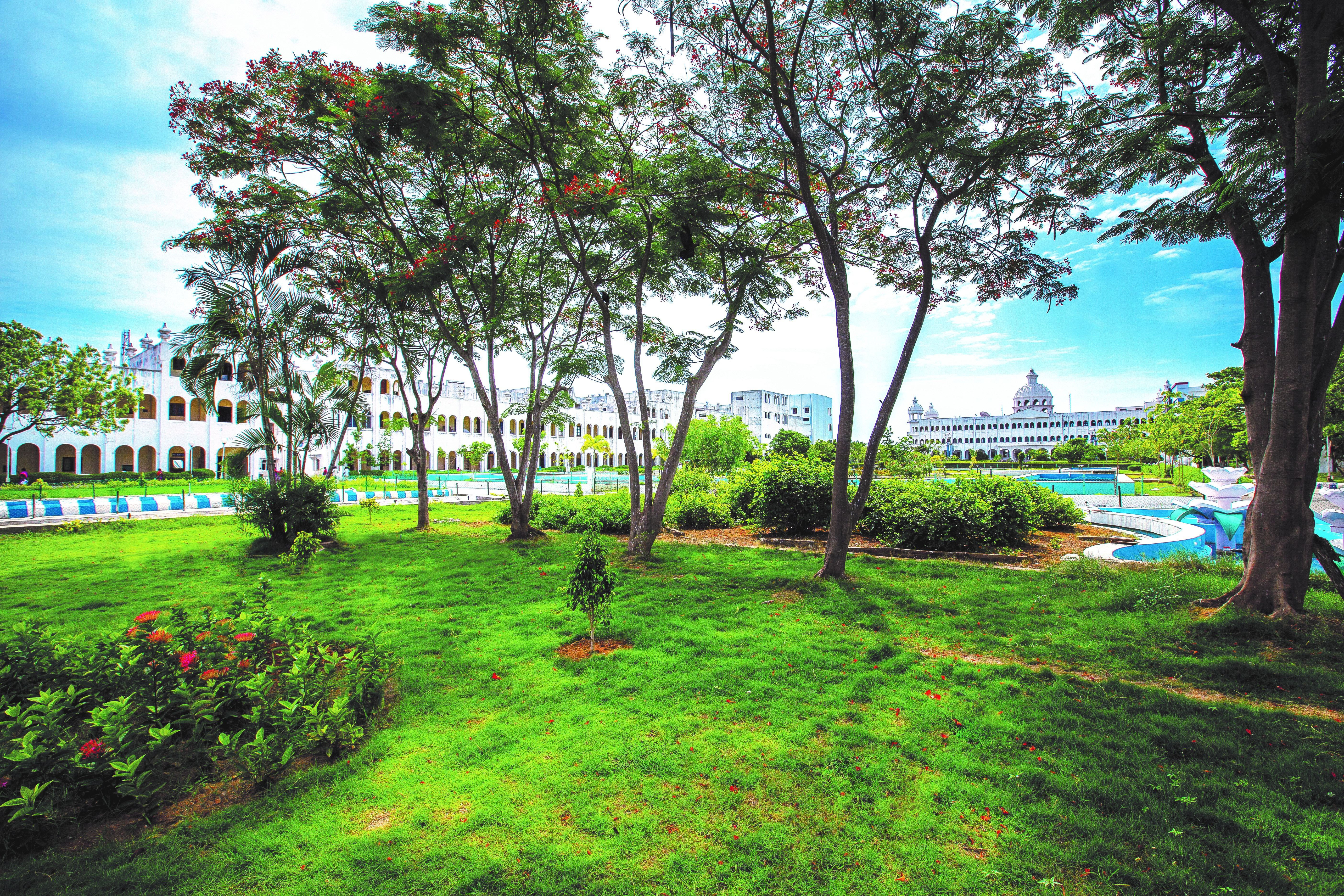
Sathyabama Institute of Science and Technology is committed to an environmentally responsible campus with size of 140 acres through its comprehensive Green Campus initiatives. With a focus on sustainability, resource conservation, and ecological stewardship, the institution integrates green practices into every aspect of campus life.
The campus is designed with energy-efficient buildings, abundant green cover, and eco-friendly facilities that reduce environmental impact while creating a healthy learning environment. To minimize reliance on conventional power sources, Sathyabama has incorporated solar energy systems and other low-carbon technologies, contributing significantly to its efforts toward carbon neutrality. Rainwater harvesting, wastewater treatment, and water recycling systems ensure efficient use of water resources and help maintain ecological balance on campus. Lush gardens, native plant species, and well-maintained landscapes promote biodiversity and enhance the overall environment, making the campus a vibrant, pollution-free space. The institute follows effective waste segregation, recycling, and responsible disposal practices. Efforts are made to reduce single-use plastics and encourage environmentally conscious behavior among students and staff.
Alternate Sources of Energy and Energy Conservation Measures
A 10-kW solar system installed on Sathyabama campus generates approximately 40,000 kWh of clean energy annually, operating 5 hours daily, significantly contributing to sustainability by reducing carbon emissions by 28.4tons per year.
This solar energy system is an asset for energy savings and emission reductions. With minor optimizations and potential expansion, its benefits can be further amplified, contributing to long-term environmental and economic gains.
Replacing conventional 75W fans with energy-efficient BLDC fans, which consume only 28-35W, can result in significant energy savings of up to 60%, lower electricity bills, and reduced maintenance costs. This transition aligns with sustainability goals by minimizing the institution's carbon footprint and offers long-term financial benefits despite the higher initial investment. Prioritizing high-usage areas like hostels, mess halls, and classrooms will maximize impact, making it a smart and eco-friendly choice for the campus.
Environmental Practices at Sathyabama
Sathyabama’s environment-friendly practices aligned with Climate Action include:
Annual carbon footprint audit and emission reduction policies.
Use of battery vehicles, biodiesel buses, and solar-powered kitchens.
Integration of solar-wind hybrid systems and solar walkway lighting.
1.5 MLD STP with complete water reuse, rainwater harvesting, and zero leakage systems.
Circular economy initiatives: WCO to biodiesel, food waste diversion, e-waste recycling.
Robust solid, plastic, ritual, and e-waste management systems.
Green campus development with over 33,705 sqm of green cover.
Regular student and community climate awareness programmes.
Carbon Footprint Assessment & Monitoring
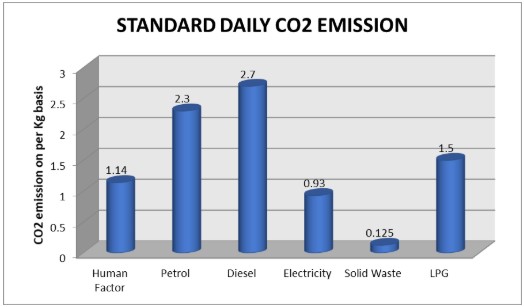
An annual carbon footprint audit is conducted for the entire campus, assessing human emissions, transportation, electricity consumption, solid waste, and LPG/natural gas usage, while also evaluating environment-friendly practices to identify high-emission zones and develop effective emission-reduction strategies.
Transition to Low-Carbon Transport
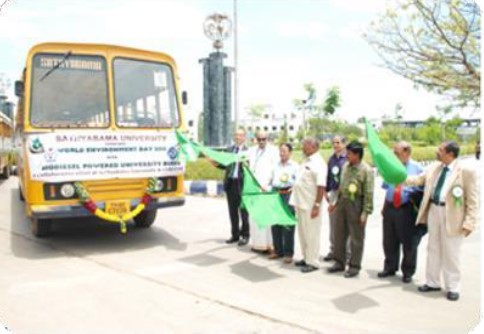
The institution has transitioned to low-carbon transport by using battery-operated vehicles for intra-campus movement, restricting personal vehicles to minimize fossil-fuel-based travel, and operating campus buses with a 15% biodiesel blend derived from waste cooking oil—significantly reducing CO₂ emissions, fuel consumption, and noise levels while improving mileage by 5–7 km/L compared to diesel alone
Carbon Footprint Analysis
Carbon footprint analysis is done by suitably combining data collected with respective emission factor of the selected emission inventories as shown in below image.
Climate Action Through Waste Reduction & Circular Economy
Solid Waste Reduction
Strict implementation of waste audit system with Institutional Waste Audit Committee.
Waste segregation, regular monitoring, and policy-based systematic audits.
Food Waste Diversion
41,250 kg/year food waste diverted as pig feed (highest level in waste reduction hierarchy).
Part of food waste used for research to produce Organic pots.
Waste Cooking Oil to Biodiesel
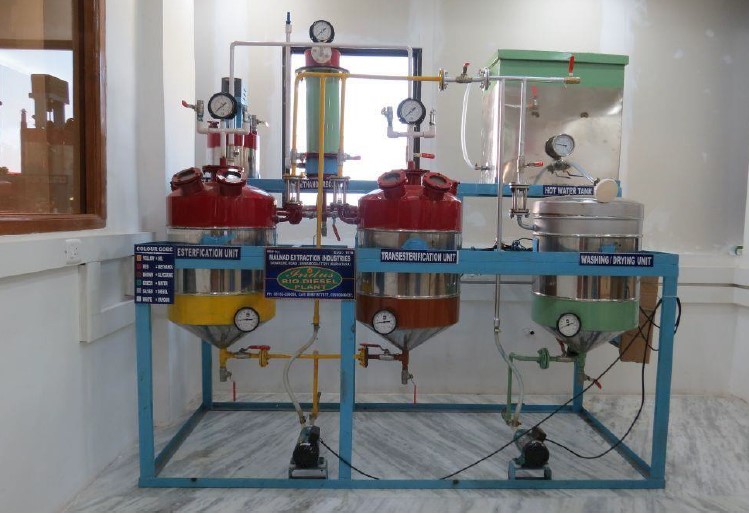
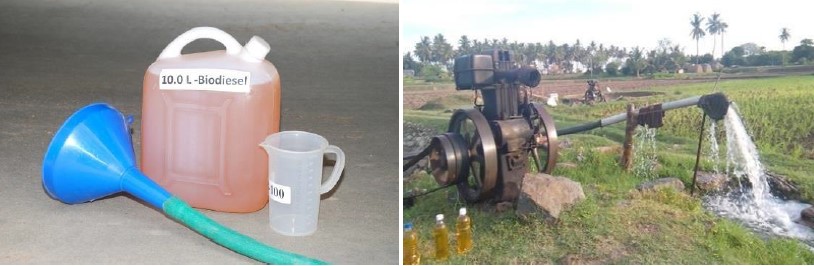
Mess-generated waste cooking oil converted to biodiesel, used in Institution buses, Water pump sets, Generators. This demonstrates a campus-level circular economy model that directly reduces CO₂ emissions.
Plastic Waste Reduction
Plastic covers & milk packets recycled into plastic granules used for manufacturing products, PET bottles reused in sustainable architecture research and model making.
E-Waste Reduction
E-waste given only to authorized recyclers. MoU with VANS Chemistry Pvt. Ltd. for safe dismantling, training & future e-waste collection hub establishment. Conducts community awareness programmes on e-waste hazards and disposal.
Climate Action Through Water Management & Adaptation
Zero-Liquid-Discharge Approach
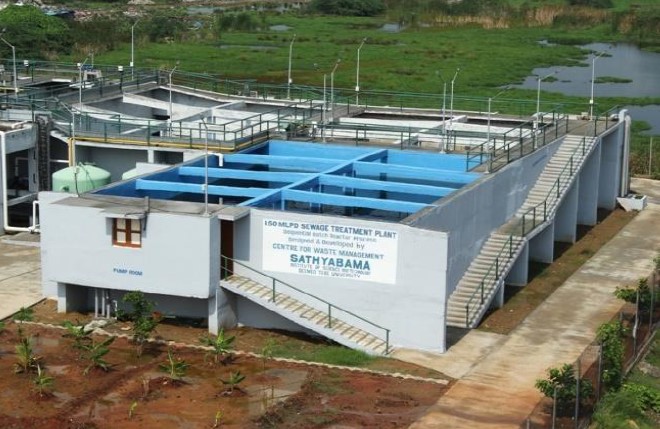
Sathyabama campus operates a 1.5 MLD Sewage Treatment Plant (STP) where the treated water is reused for gardening, landscaping, toilet flushing. Institution promotes resilience to water scarcity and reduces demand for freshwater.
Rainwater Harvesting & Leak Prevention
Rainwater harvesting pits have been established across the campus, with rooftop rainwater harvesting structures installed and continuously maintained by the water maintenance division to ensure zero leakage
Sathyabama’s contribution toward climate change and disaster
Sathyabama researcher’s findings in Risk early warning – discussed in the Indian Parliament
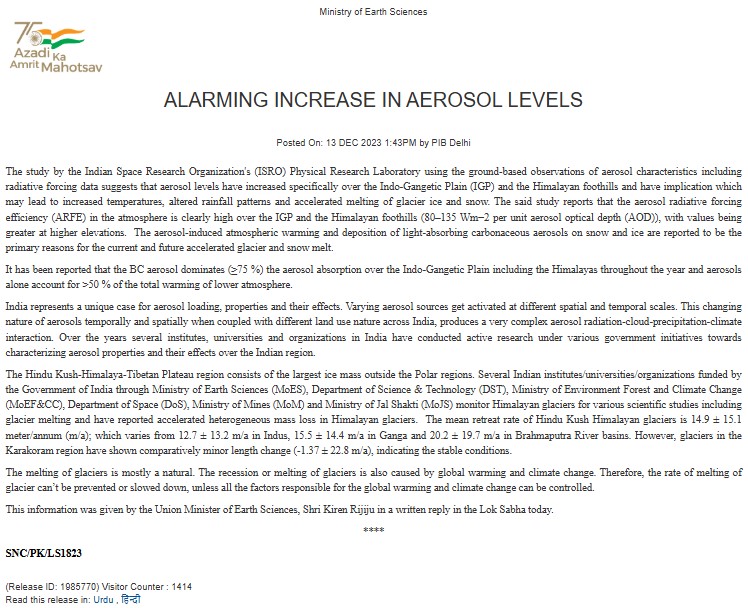
One of the scientists from the research centre has contributed to the research, whose findings were recently published in the Science of the Total Environment journal. The research is all about “Aerosols heat up the Himalayan Climate” which is an alarming finding, a study by Isro’s Ahmedabad-based Physical Research Laboratory (PRL). This will remain a key factor driving climate change over the Hindu Kush–Himalaya–Tibetan Plateau (HKHTP) region". It also said “aerosols alone account for over 50% of the total warming (aerosols + greenhouse gases) of the lower atmosphere". This issue of “ALARMING INCREASE IN AEROSOL LEVELS” was discussed in India's Parliament on December 13, 2023.
https://www.pib.gov.in/PressReleasePage.aspx?PRID=1985770
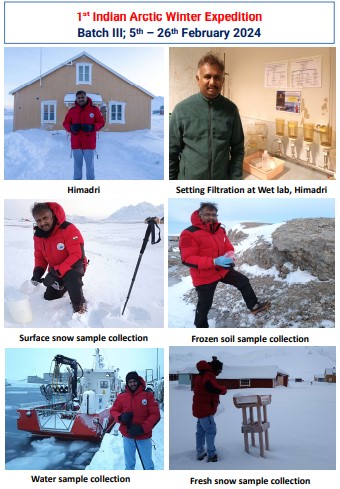
Sathyabama researcher’ collaborated with a government agency in the Arctic Winter Expedition, contributing to India’s polar research efforts
The 1st Indian Arctic Winter Expedition, organized by the National Centre for Polar and Ocean Research (NCPOR) under the Ministry of Earth Sciences (MoES), Vasco da Gama, Goa, included a research project titled “Diversity and distribution of actinobacteria in the Arctic during polar nights and their adaptation properties.” This expedition report was submitted by Dr. M. Radhakrishnan, Professor (Research) and Scientific Member (Microbiology), from Centre for Drug Discovery and Development at Sathyabama Institute of Science and Technology, Chennai, Tamil Nadu, India participated as part of Batch III in February 2024.
Research Centres at Sathyabama contributing for Climate Action
The Centre for Climate Change Studies (CCCS)
The Centre for Climate Change Studies (CCCS), established in 2011 under Sathyabama’s Research Centre, focuses on assessing climate change impacts on marine ecosystems such as coral reefs, seagrass meadows, seaweeds, intertidal zones, and mangroves, while conducting research on micro-plankton responses to rising temperature and declining pH, adaptive potential of marine organisms, carbon sequestration ability of macro- and micro-algae, biomineralization under ocean acidification, and coastal biotic–abiotic changes; additionally, through its associated marine station, CCCS contributes to the sustainable management and conservation of coastal ecosystems, which serve as vital carbon sinks and climate buffers, thereby directly supporting SDG 13 by advancing climate-impact assessment, mitigation, and adaptation strategies. https://www.centreforclimatechangestudies.com/index.html
Centre for Earth and Atmospheric Sciences (CEAS)
Centre for Earth and Atmospheric Sciences (CEAS) was established at Sathyabama Institute of Science and Technology in 2010 to initiate quality research for the young minds in Earth, Ocean and Atmospheric Sciences. Centre comprises of multi-disciplinary team of meteorologists, geologists, hydrogeologists, physicists and geochemists who are actively engaged in basic research on Earth Science, Remote Sensing, GIS, Modeling, Agriculture, Environmental and Air Pollution studies. It is an emerging interdisciplinary centre that aims to tackle climate change and work to preserve the natural resources. Advanced GeoEnvironmental Laboratory stands as a beacon of innovation within the Centre, equipped with cutting-edge instruments and technologies that redefine learning and research.
Centre for Waste Management (CWM)
Centre for Waste Management was set up (in 2011) in collaboration with the National Solid Waste Association of India to address environmental pollution and waste management through research, innovation and outreach activities. The centre “investigates the prospects of waste in any form for effective conversion into energy and value-added products.”
According to the latest sustainability report of Sathyabama, CWM’s initiatives directly contribute to climate action: e-waste is disposed of via authorised recyclers (per E-Waste Management Rules), reducing pollution; waste audits are conducted to track and improve waste management; and importantly, waste cooking oil (WCO) is converted into biodiesel — used in institutional vehicles — thereby reducing reliance on fossil fuels.
https://www.centreforwastemanagement.com/
Centre of Excellence for Energy Research (CEER)
CEER is an official research centre at Sathyabama, established under Government of India’s FAST (Frontier Areas of Science & Technology) scheme in 2014. Its focus is on “sustainable energy technologies”— including research on solar photovoltaics, fuel cells, batteries, bioenergy, and other clean-energy solutions. CEER’s work supports development and deployment of renewable / clean energy technologies — fundamental for reducing carbon emissions and supporting long-term climate mitigation.
Sathyabama’s Student and Community group-Centric Initiatives
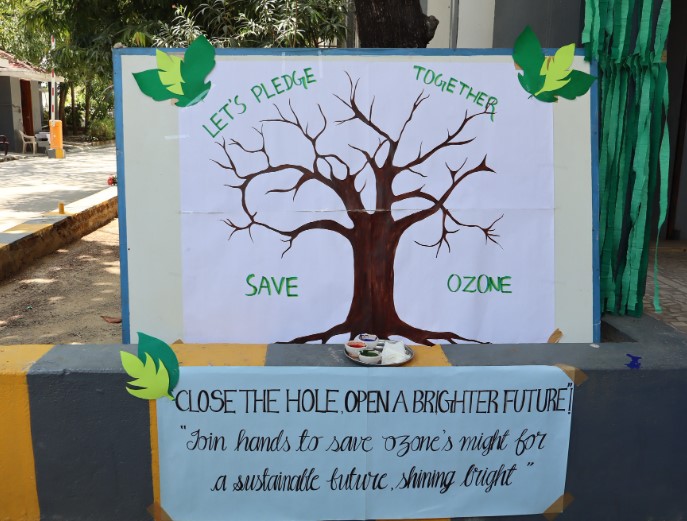
In commemoration of World Ozone Day 2024, Centre for Waste Management, Centre of Excellence for Energy Research, in association with the Department of Chemical Engineering, Sathyabama Institute of Science and Technology organized a guest lecture on "Global Environmental Issues and Remedial Measures". The event was inspiring and brought together experts, enthusiastic academicians, and industrial professionals to raise awareness about ozone layer protection and explore sustainable solutions by research activities. Dr. S. V. Srinivasan, Senior Principal Scientist, Department of Environmental Engineering, from CSIR - Central Leather Research Institute, Chennai shared valuable insights on the Montreal Protocol and strategies to reduce ozone depletion through reuse and recycling and adopting sustainable energy sources. Our B.Tech Chemical Engineering students raised awareness through creative activities like face painting and thumb painting to promote the message of saving the Earth. The day concluded with a rally to mark the importance of World Ozone Day.
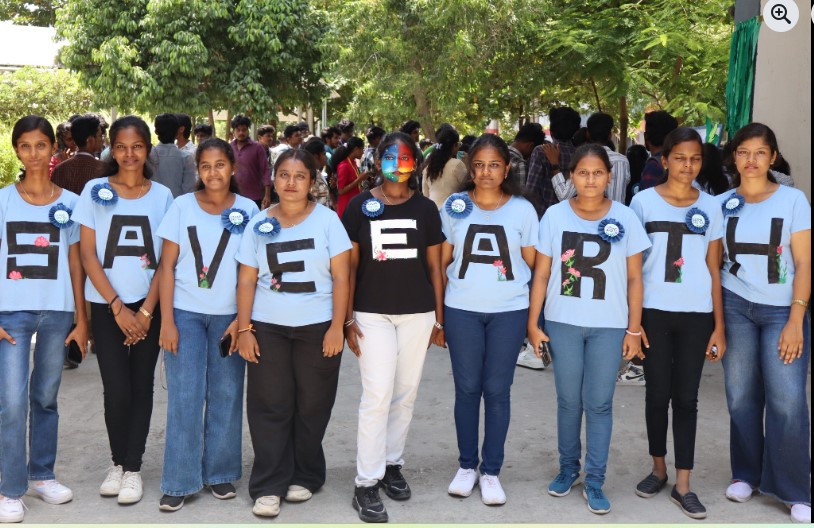
Awareness program to preserve environment
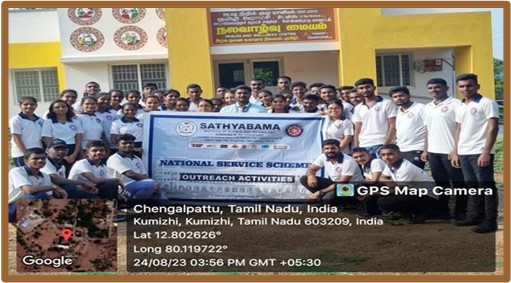
On August 24, 2023, the NSS unit of Sathyabama Institute of Science and Technology organized a successful outreach activity in Kumizhi Panchayat, near Guduvanchery, Chennai. Approximately 150 enthusiastic volunteers participated in the "Save the Soil" campaign.
Activities included awareness sessions, interactive workshops, and practical demonstrations highlighting the importance of soil conservation and sustainable practices. Volunteers engaged with the local community, fostering a sense of responsibility toward preserving our environment.
The event fostered meaningful connections and empowered individuals to take action for a greener, healthier planet.
International Coastal Clean up Day Drive
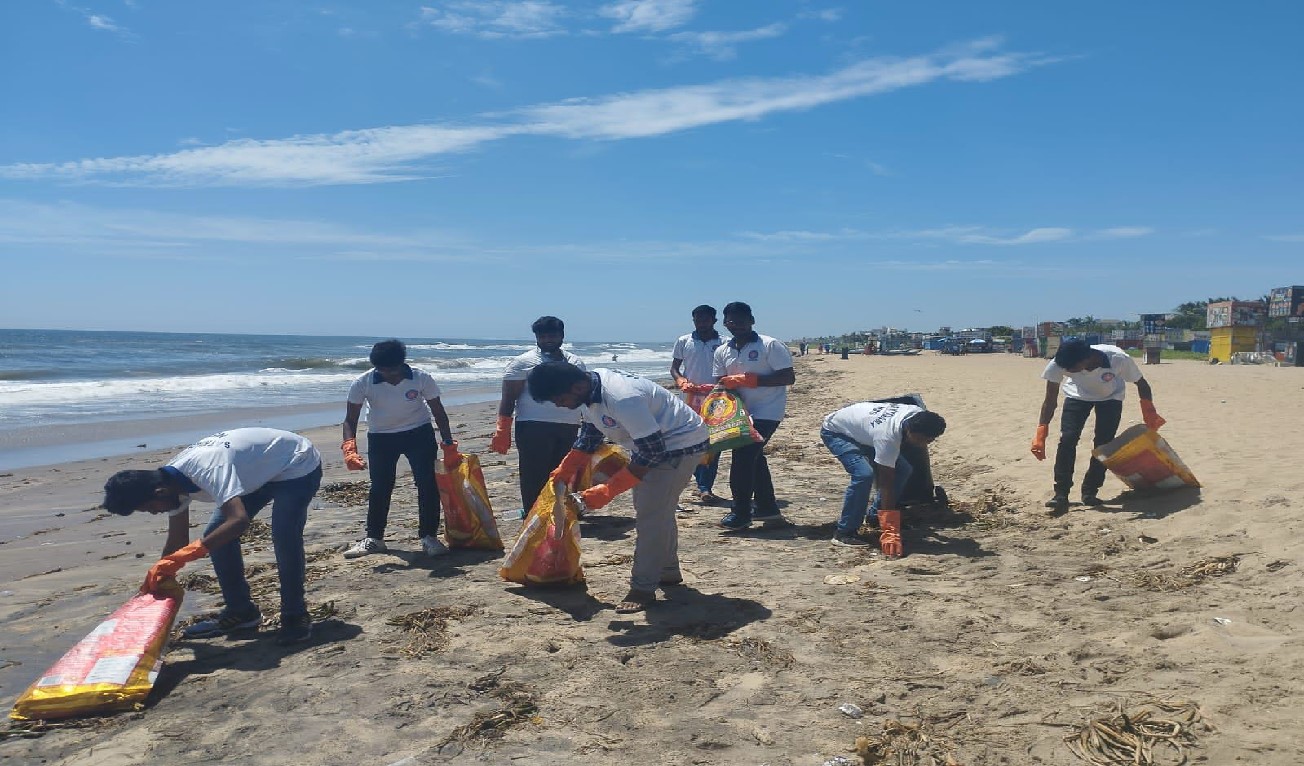
he NSS unit of Sathyabama Institute of Science and Technology, in collaboration with the National Institute of Ocean Technology (NIOT), spearheaded a significant International Coastal Cleanup Day Drive on September 16, 2023, mobilizing a dedicated team of 200 volunteers. With a unified commitment to environmental protection, participants carried out an extensive cleanup along coastal stretches, removing debris and supporting marine conservation.
In alignment with SDG 13 (Climate Action), the initiative emphasized proactive measures to address climate-related challenges through the protection of coastal and marine ecosystems. This collective effort not only helped preserve fragile coastal environments but also enhanced public awareness on responsible waste management. The collaboration reflected a strong commitment to safeguarding natural resources and promoting sustainability for future generations.