

Sathyabama Institute of Science and Technology: To Keep Oceans Clean, Safe and Alive for Generations to Thrive
Sathyabama's Overall Mission in alignment with SDG 14 Life Below Water is integrated into curriculum, research priorities, and community development initiatives. The institution promotes marine conservation, sustainable ocean practices, and scientific innovation through academic programmes, dedicated research centres, and extensive outreach activities. By integrating ocean literacy, advanced marine research, and community-based coastal protection efforts, Sathyabama works to ensure the long-term health of marine ecosystems and contributes to global sustainability goals. The institution aims to create a better world by providing solutions to global challenges through research and innovation.
Sathyabama's primary engagement is through its premier research centres
Sathyabama's primary engagement is through its premier research centers, including the Centre for Ocean Research (COR), Centre for Climate Change Studies, Centre for Remote Sensing and Geoinformatics, and Centre for Earth and Atmospheric Sciences. The COR was established in collaboration with the National Institute of Ocean Technology (NIOT), Chennai, to encourage targeted research in ocean science.
Centre for Ocean Research (COR)
Centre for Ocean Research (COR) at Sathyabama Institute of Science and Technology is a premier entity in ocean sciences and marine biotechnology, tackling global challenges in sustainable marine management. With cutting-edge infrastructure, a team of expert researchers, and a strong multidisciplinary approach, COR drives innovation in ecosystem management, biodiversity conservation, and marine technology. Backed by national and international funding partners, COR plays a crucial role in advancing scientific research and promoting societal progress.
https://research.sathyabama.ac.in/home/CentreforOceanResearch
Centre for Remote Sensing and Geoinformatics (CRSG)
CRSG focuses on the application of remote sensing and geoinformatics to resolve environmental, urban, and agricultural challenges. It combines satellite data, geographic information systems, and spatial analysis techniques to support decision-making and sustainable development. CRSG typically engages in projects related to land use planning, environmental monitoring, disaster management, and resource management providing critical insights for both Government Organisations and Private Sector stakeholders.
Centre for Remote Sensing and Geoinformatics was established in 2004 at the Sathyabama Institute of Science and Technology in collaboration with the Indian Space Research Organisation (ISRO) to advance research in frontier areas of Science and Technology. It was inaugurated by Dr. Kasturirangan, Former ISRO Chairman and Secretary of the Department of Space, Government of India. The centre undertakes research and consultancy projects funded by National funding agencies such as DST, MoEF, MoES, CSIR, ICMR, and ISRO, along with organisations like NIWE, BHAVINI, and NRSC. As a nodal Centre of IIRS and ISRS, the centre regularly conducts Geospatial Training Programs aimed at educating the next generation of scientists, researchers, and professionals in the field of Remote Sensing and Geographic Information Systems (GIS). The Centre boasts a team of scientists specializing in diverse fields such as Agriculture, Coastal Studies, Environment and Forest, Water Resources, Urban Development, Climate Studies, and Aerial Photogrammetry.
https://research.sathyabama.ac.in/home/CentreforRemoteSensingandGeoinformatics
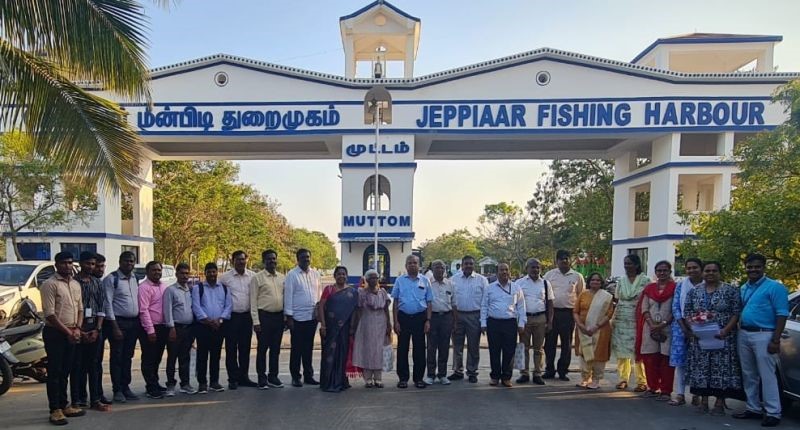
Sathyabama Ocean Research Field Station at Jeppiaar Fishing Harbour, Muttom
The Sathyabama Ocean Research Field Station is a research facility located at the Jeppiaar Fishing Harbour in Muttom, which a private harbor, constructed by our Founder Chancellor, Colonel Dr. Jeppiaar his birth place, a Coastal area of Kanyakumari District to provide employment opportunity to the people of that village, situated in the extreme Southern part of India. It is established to extend ocean research activities to coastal areas. It is part of Sathyabama Institute of Science and Technology's Centre for Ocean Research and plays a role in marine research, technology transfer, and training workshops, facilitating hands-on marine research and development to the local community in that area.
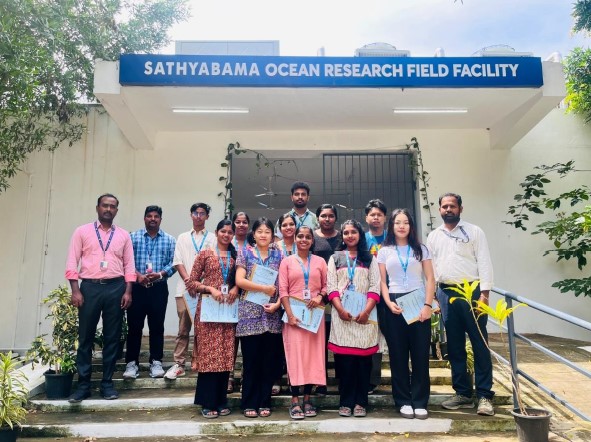
Sathyabama Ocean Research Field Facility on campus
Sathyabama has a dedicated space within the university for hands-on oceanographic research, training, and marine studies with development and maintenance of aquaculture.
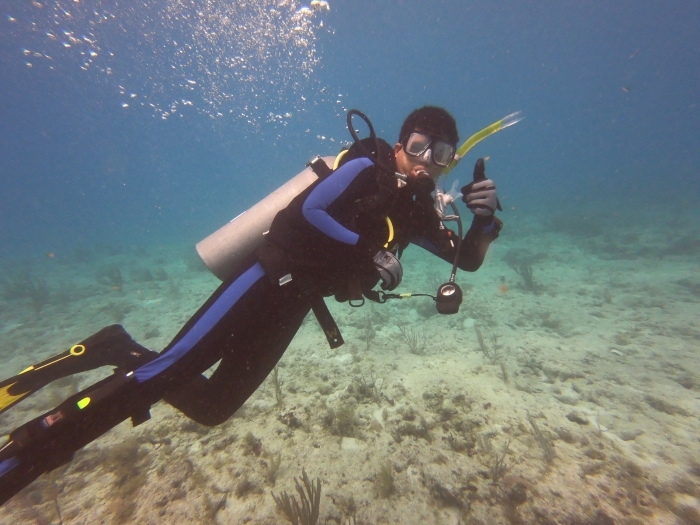
Sathyabama Marine Research Station (SMRS)
Sathyabama Institute of Science and Technology has established a new Marine Research Station at Rameswaram. The facilities at the marine station include SCUBA diving kits, microscope, underwater camera, plankton nets, PAM fluorometer etc. Marine Station would encourage our researchers to do cutting-edge marine ecology and climate change research. The facilities will be used to manage and conserve the natural ecosystems sustainably for the benefit of the coastal communities of Gulf of Mannar and Palk Bay regions. One of our faculty is an open water Scuba diving license holder.
Creating Opportunities for Women through Seaweed Farming
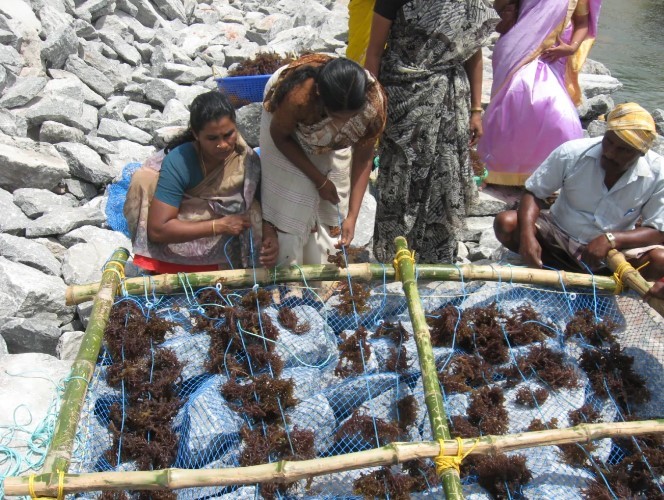
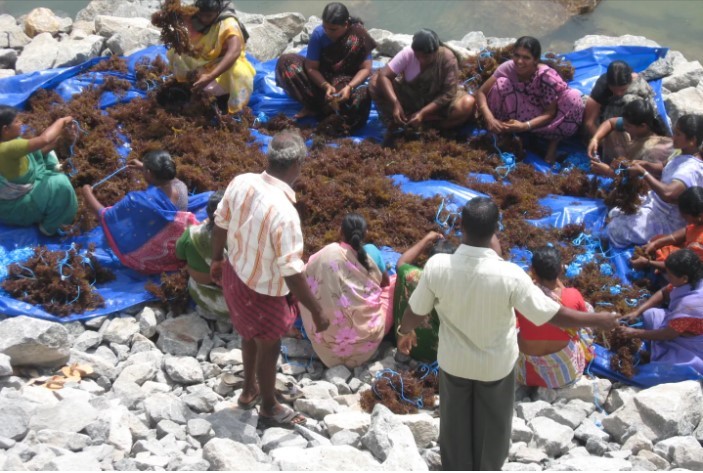
The Centre for Ocean Research, Sathyabama Institute of Science and Technology have initiated cultivation of red sea weed (Kappaphycus alvarezii), by imparting rigorous entrepreneurship trainings to fisherwomen. Self-help groups are formed at Muttom fishing harbor vicinity in Tamil Nadu, making seaweed as an alternative source of income generation
Fisherwomen gathered as groups and trained to knot the seaweed sap in the nylon rope at Field Research Facility, Muttom, Kanyakumari District, India.
Sathyabama works collaboratively with government agencies and industry partners
Sathyabama works directly with government agencies and industries through research to maintain and extend existing ecosystems and their biodiversity of plants, animals and marine species especially ecosystems under threat.
Sathyabama has signed Memorandums of Understanding (MoUs) with government agencies like Bay of Bengal Programme Inter-Governmental Organisation (BOBP_IGO), Ministry of Earth Sciences (MoES)Indian National Centre for Ocean Information Services (INCOIS), ICAR - Central Marine Fisheries Research Institute (CMFRI) for collaborative research work to increase awareness and knowledge of the needs, benefits and practices of marine fisheries management, enhancement skills through training and education, transfer of appropriate technologies and techniques for development of the small-scale fisheries to establish regional information networking and promote women's participation in marine fisheries value chain.
The institution has also established its relationship with industries such as Seabytes, PrimeGen, Nanovea, Lupex, Labmate, Kanishka, Harris and Menuk, Carl Zeiss, Toshvin and Vetbiotic to collaboratively excel in the areas of research and development, training and other agreed activities.
Sathyabama has also signed MoU with Mangrove Foundation India to take necessary steps to prevent and create awareness on the restoration of mangrove forests. our university collaborates with NGO communities to create awareness about climate adaptation among the people in the locality. Our institution has participated in tree plantation drive and planted thousands of trees. The Centre of Ocean Research (COR) at Sathyabama University signed a Memorandum of Understanding (MoU) with the Mangrove Foundation of India to support community-driven mangrove restoration initiatives. Through the Community-Based Ecological Mangrove Restoration (CBEMR) approach, the collaboration aims to empower local communities to restore and sustainably manage mangrove ecosystems, thereby strengthening their livelihoods and enhancing their capacity to face and adapt to climate change.
https://www.mangrovefoundationindia.com/copy-of-donate
Sathyabama’s responsible practice to efficient water sensitive waste disposal
Sathyabama has established a range of well-designed and effectively implemented practices and policies aimed at preventing potential harm to humans, animals, and the environment. Some of the key policies include adherence to water quality standards and discharge guidelines, the adoption of environment-friendly practices, and measures aimed at reducing marine pollution.
Water Quality Policy
The institution ensures continuous monitoring of water quality, preventing contamination of aquatic ecosystems and safeguarding water-dependent biodiversity. Through its functional Sewage Treatment Plant (STP), treated water is safely reused for gardening and landscaping, significantly reducing the discharge of polluted water into the environment.
Rainwater harvesting systems, flow-regulated taps, aerators, and water conservation structures—such as ponds, percolation pits, and storage tanks—collectively contribute to minimizing freshwater extraction and preventing marine and freshwater pollution. Sathyabama further advances SDG 14 by supporting research in water quality, recycling, reuse, desalination, prevention of salinity ingress, groundwater recharge, and sustainable water management practices. The institution also organizes awareness and outreach programs to foster responsible water use and protection of aquatic ecosystems in surrounding communities.
https://sist.sathyabama.ac.in/download/WaterQuality.pdf
Sathyabama’s Action plan to reducing plastic waste
Sathyabama has adopted best environment friendly practices that contributes to implementing robust systems to prevent land-based pollution from entering aquatic and marine ecosystems. The institution’s comprehensive action plan to reduce solid, liquid, plastic, food, biomedical, and e-waste on campus thereby to ensure that harmful waste is segregated, treated, and disposed of responsibly, thereby reducing the risk of contaminants reaching water bodies.
Also through Community Outreach activities the institution extends plastic awareness campaigns to nearby communities and schools, organizes beach clean-up, lake clean-up, and neighbourhood waste management drives and collaborate with NGOs, recycling companies, and government bodies for large-scale impact.
Sathyabama’s policy to prevent Marine Pollution
Sathyabama advances SDG 14 by implementing strong waste management and pollution-prevention systems that directly reduce the risk of contaminants entering aquatic and marine environments. The institution carries out a comprehensive waste audit to ensure proper segregation and handling of solid, liquid, biomedical, plastic, ritual, and e-waste, thereby preventing harmful materials from reaching water bodies.
Through liquid waste management, Sathyabama operates a 1.5 MLD Sewage Treatment Plant (STP) that treats all campus wastewater, with the treated water reused for gardening and toilet flushing. This minimizes the release of untreated effluents into the environment, significantly contributing to the reduction of water pollution. Storm water is Environment Friendly efficiently managed through rainwater harvesting pits and roof-top harvesting structures, reducing runoff contamination. The institution also converts waste cooking oil into biodiesel, preventing improper disposal that could pollute waterways.
Plastic pollution—a major global marine threat—is addressed through source segregation, recycling of plastic covers into granules, and repurposing PET bottles for sustainable building research, thereby reducing plastic waste that might otherwise reach landfills and water systems.
https://sist.sathyabama.ac.in/download/MarinePollution.pdf
Sathyabama Faculty involvement towards protection and restoration of ecosystems
In order to protect and Restore ecosystems, Sathyabama has collaborated on research projects, such as the assessment of wetland change dynamics along the Chennai coast using satellite remote sensing, to monitor and address the impacts of urbanization on coastal ecosystems.
One of our research scientists has been the co-organizer for the SS054P Trait Development and Resilience of Aquatic Microbial Communities Under Anthropogenic Stressors in Coastal Ecosystems: A Focus on Coastal Oceans of Global South" from a conference like the American Geophysical Union (AGU).
https://aslo.secure-platform.com/2023/solicitations/12/sessiongallery/1101
one of our scientists worked closely with coastal communities to promote participatory approaches for conservation and livelihood development, particularly in vulnerable coastal areas of Tamil Nadu and the Andaman & Nicobar Islands. His leadership in fostering science-policy-industry-community linkages has led to impactful outcomes in areas such as mangrove protection, marine bioresource utilization, and restoration planning. A recipient of national-level recognitions for his contribution to education, guidance, and institutional development, he has also served on multiple scientific and advisory committees. He actively mentors students and young researchers and is committed to building local capacities for marine ecosystem sustainability. With his deep knowledge of coastal ecology, community engagement, and environmental governance, he brings valuable expertise and insight to the Advisory Committee of the Mangrove Foundation of India, supporting its mission to protect, conserve, and restore India's vital mangrove ecosystems.
He is Co-Chair, Ecosystem-based Aquaculture & Fisheries Group (E-bAG)
IUCN - Commission on Ecosystem Management (CEM)
https://iucn.org/our-union/commissions/group/iucn-cem-ecosystem-based-aquaculture-task-force
Sathyabama’s contribution towards Sustainable Fishing and Conservation
The university conducts public awareness campaigns for the conservation of endangered species like sharks and rays in Tamil Nadu coastal waters, distributing identification flyers in the local language to fishermen.
It also initiated the cultivation of red seaweed (Kappaphycus alvarezii), providing rigorous entrepreneurship training to fisherwomen as an alternative source of income, thereby promoting sustainable use of marine resources.
Outreach act towards Seagrass ecosystem Services, Conservation and Restoration
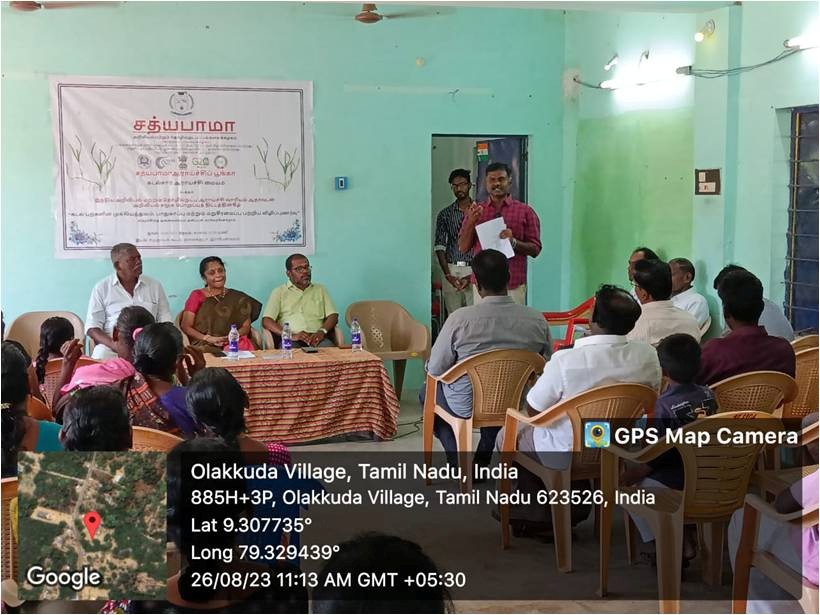
Centre for Ocean Research, Sathyabama Research Park, organized DST-SERB sponsored Scientific Social Responsibility (SSR) programme on “Outreach act towards Seagrass ecosystem Services, Conservation and Restoration” for Olaikuda Fisherman Community which was held at Community hall, Rameswaram on 26th August, 2023.
The program was aimed to raise awareness among the fisherman community about the vital importance of Seagrass ecosystems along Tamil Nadu Coasts and to bring attention to the plight of seagrass meadows, encourage people to protect, take action and promote solutions for their sustainable management, conservation and restoration. Many fisher men and women participated in the program.
Swachh Bharat Mission Initiative – students towards societal responsible citizens
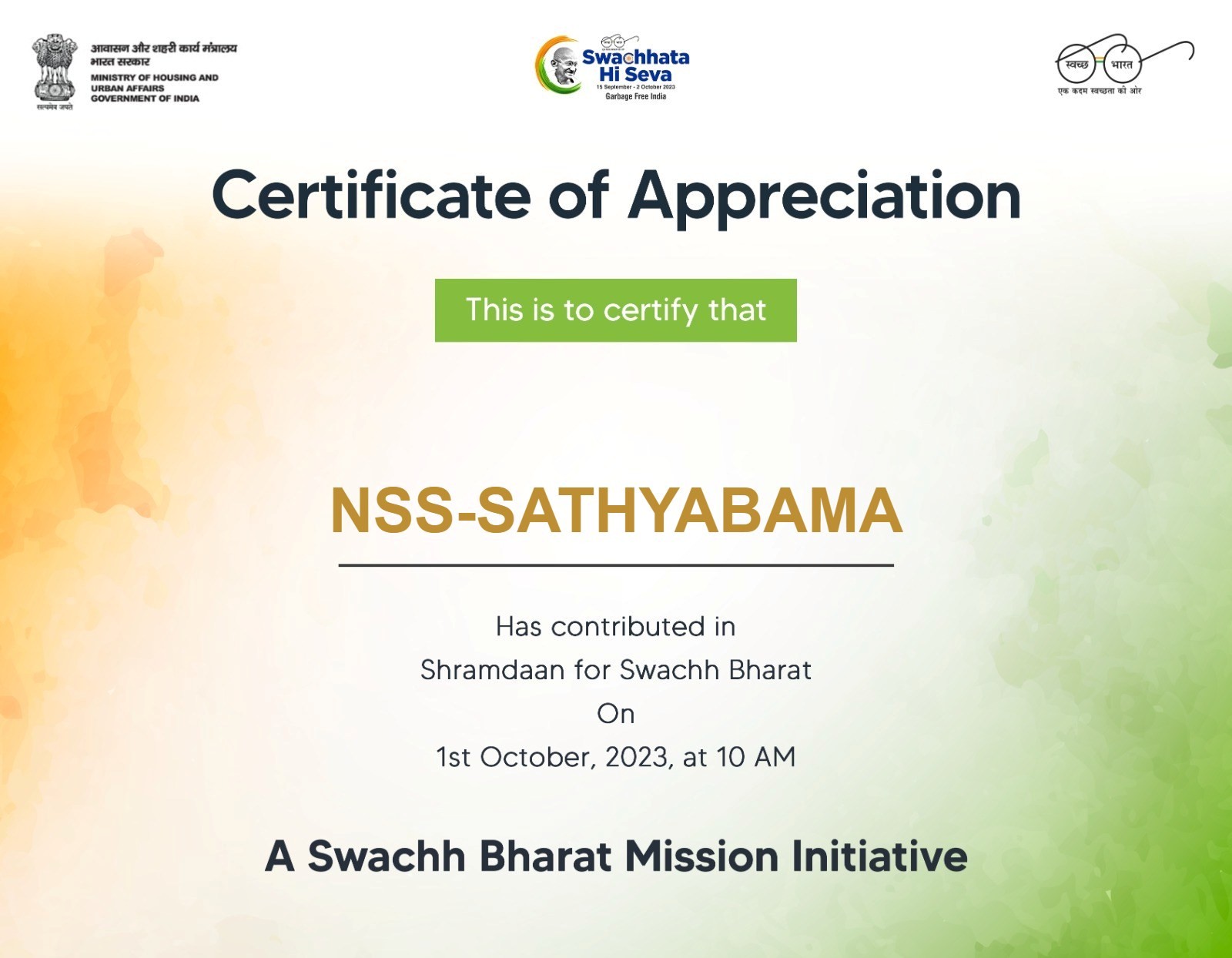
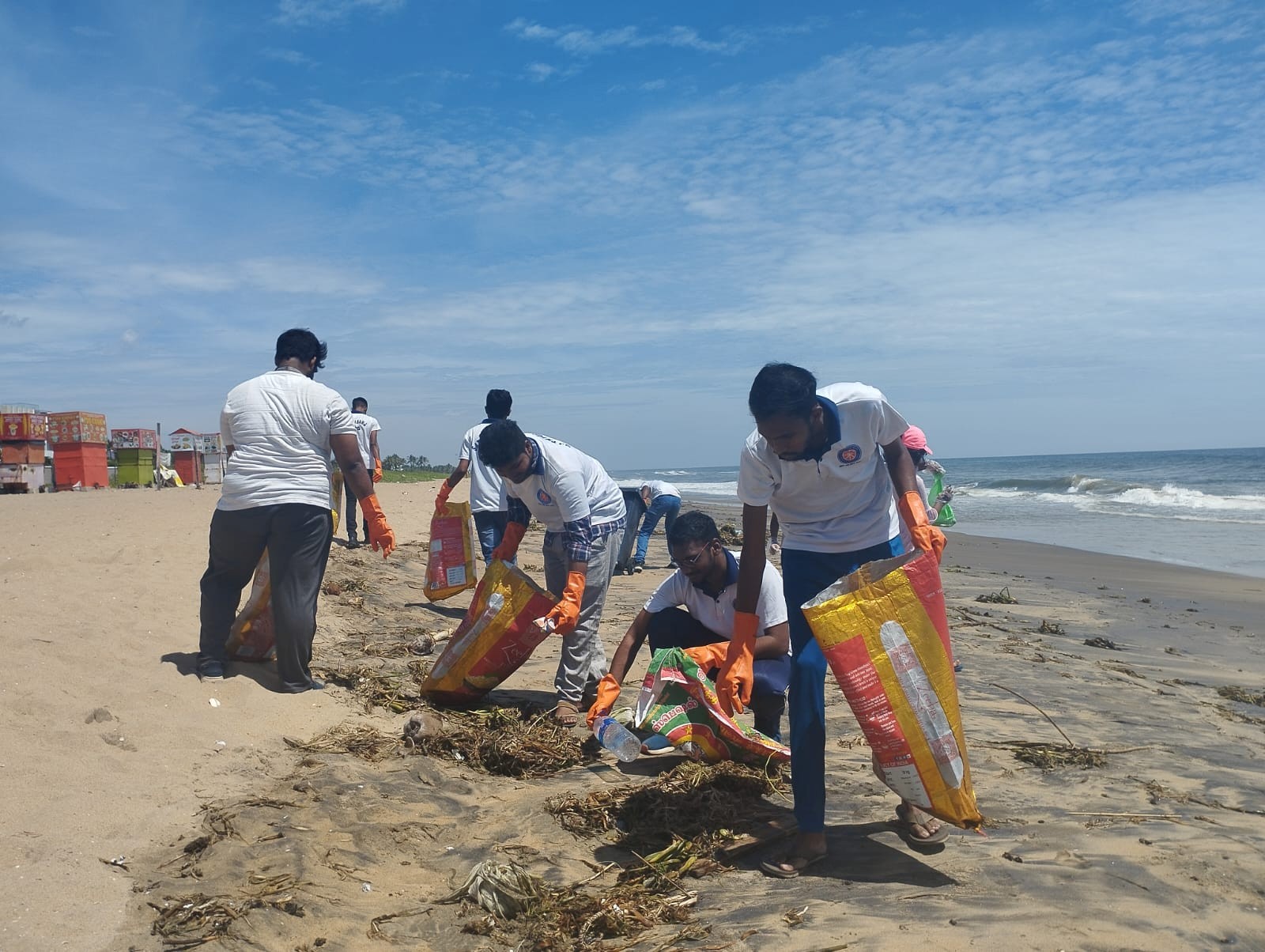
The NSS Unit of Sathyabama Institute of Science and Technology has participated in Shramdaan for Swachhata in collaboration with Central Bureau of Communication and Regional directorate of NSS as a part of our outreach activities on 1st October, 2023 at Akkarai Beach, Injambakkam Village ,East Coast Road, Chennai. Sathyabama students have done a Beach cleaning drive and conducted a social awareness rally on Essentials of Garbage free India to the public thereby motivating the students to be societal responsible citizens. It is an Initiative to protect the coastal zone for the wellbeing of the upcoming generation. Around 40 volunteers have actively participated to complete this event successfully.